How to Remove a Partition Wall in Singapore (Cost + Process)

Jeff Kang
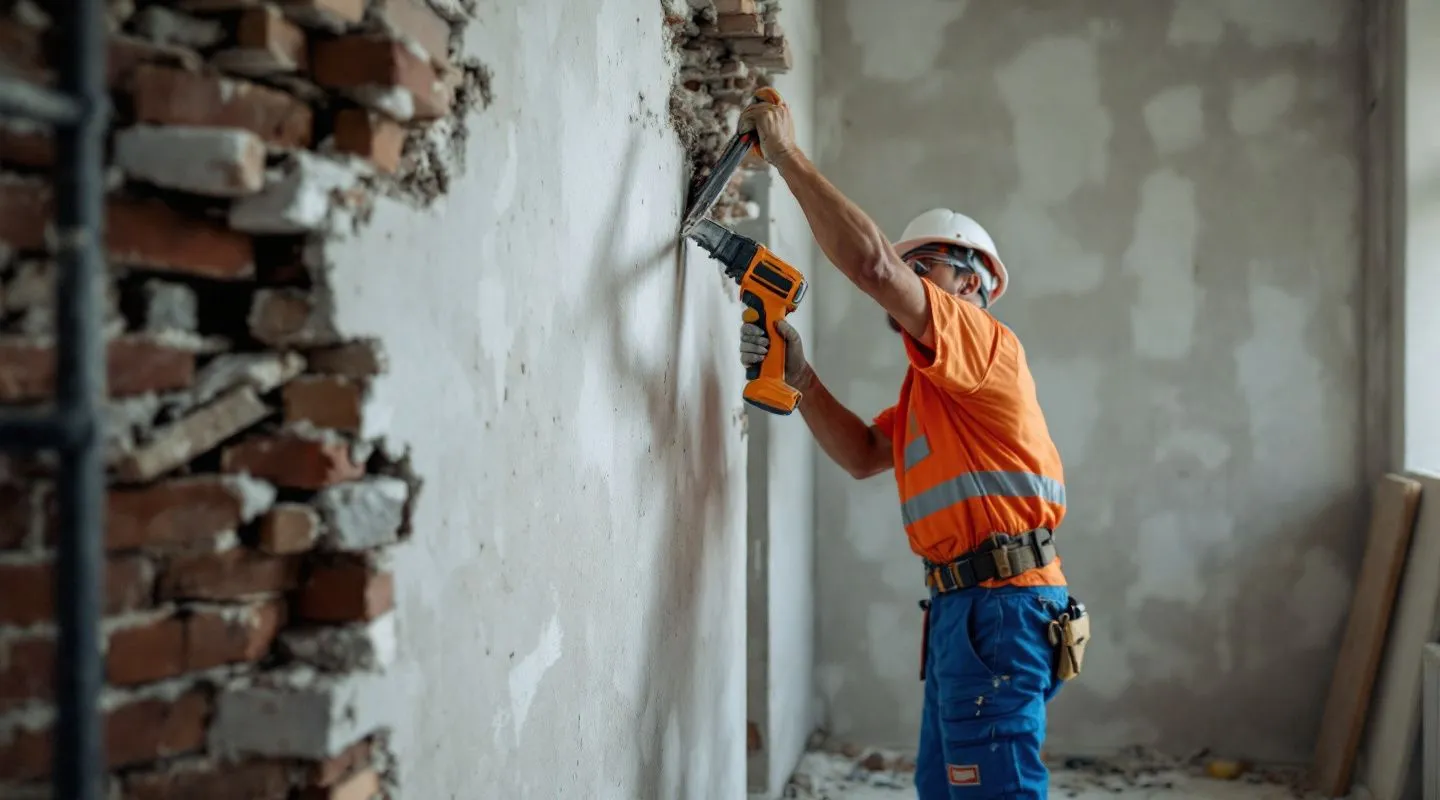
Removing a partition wall is one of the most common ways to open up a home or office in Singapore. Done well, it turns two cramped rooms into one bright, usable space. Done without checks, it can breach regulations or compromise the structure holding up the flat above yours. Here is how it works, when you are allowed to do it, and what it costs.
What a partition wall is
A partition wall divides interior space. It is not the same as an external or structural wall. There are two broad types, and the difference decides everything else.
- Non-load-bearing partition wall. Carries only its own weight and holds up nothing above it. Usually brick, masonry, hollow block, or drywall. These can be removed freely, subject to the permit rules below.
- Load-bearing wall. Carries the slab, beams, or floors above. Removing or altering one changes how loads travel through the building and cannot be done without a Professional Engineer (PE) endorsement.
How to tell a load-bearing wall from a non-load-bearing one
You cannot tell for certain by knocking on it, and you should never assume. A hollow sound suggests drywall, and a dull thud suggests brick or concrete, but plenty of solid-sounding walls are non-structural and plenty of slim ones carry real load in older layouts. A knock test is a hint, not a verdict.
A few things point towards structural, though none is proof on its own:
- The wall runs through more than one storey in the same position, floor after floor.
- It is thicker than the other internal walls, or it is reinforced concrete rather than brick or block.
- It sits under a beam, or beams and joists run into it rather than past it.
- It is an external or party wall shared with a neighbour.
The only reliable check is the approved structural drawings and, where there is any doubt, a PE inspecting the wall on site. That is why we assess before quoting and never price a job off a photo. Guessing wrong on a load-bearing wall can crack the slab above.
HDB, condo, and landed: the rules differ
The wall type decides whether you need a PE. The property type decides who you submit to first.
- HDB flats. Hacking is regulated. Removing a partition wall generally needs an HDB renovation permit, and the work must be done by an HDB-registered contractor, which our HDB wall reinstatement and hacking permit service handles end to end. If the wall is structural, HDB requires a PE to assess and endorse before it approves. Reinforced concrete walls and any wall enclosing the household shelter, the bomb shelter, must never be hacked, drilled into, or altered.
- Condominiums and MCST-managed developments. No HDB permit, but the management corporation, the MCST, runs the show. You typically submit a renovation application, pay a deposit, agree to approved hoarding, and confine noisy work to permitted hours. Structural walls still need a PE.
- Landed property. You have more freedom on internal, non-load-bearing walls, but structural alterations may need a PE and, depending on scope, a submission to the authorities. Older terraces and semi-detached homes have party walls and load paths that are easy to misjudge.
The safe rule across all three: non-load-bearing walls can come out once permits are in order; load-bearing walls need a PE endorsement first. If there is any doubt about which you have, we check before quoting. See our full wall hacking services for the range of work we handle.
The removal process, step by step
Every job runs through the same stages. This keeps the site safe, the neighbours undisturbed, and the finish clean.
1. Assessment and permits
We inspect the wall to confirm whether it is load-bearing, check for embedded services such as wiring, pipes, or gas, and confirm the permit position. If it is structural, a PE assesses and endorses before anything else moves. The HDB permit or MCST approval is secured now, not after the tools come out.
2. Protection and hoarding
Floors, doorways, lifts, and adjacent finishes are covered. Where required, we put up dust hoarding to contain debris and protect the rest of the unit. In condos and commercial buildings, this also covers common areas along the haulage route.
3. Disconnect services
Any wiring, plumbing, or gas running inside or across the wall is isolated or rerouted by the relevant tradesperson first, before a single brick is touched. Skip this and you end up with a live cable in the rubble or a burst pipe.
4. Hacking
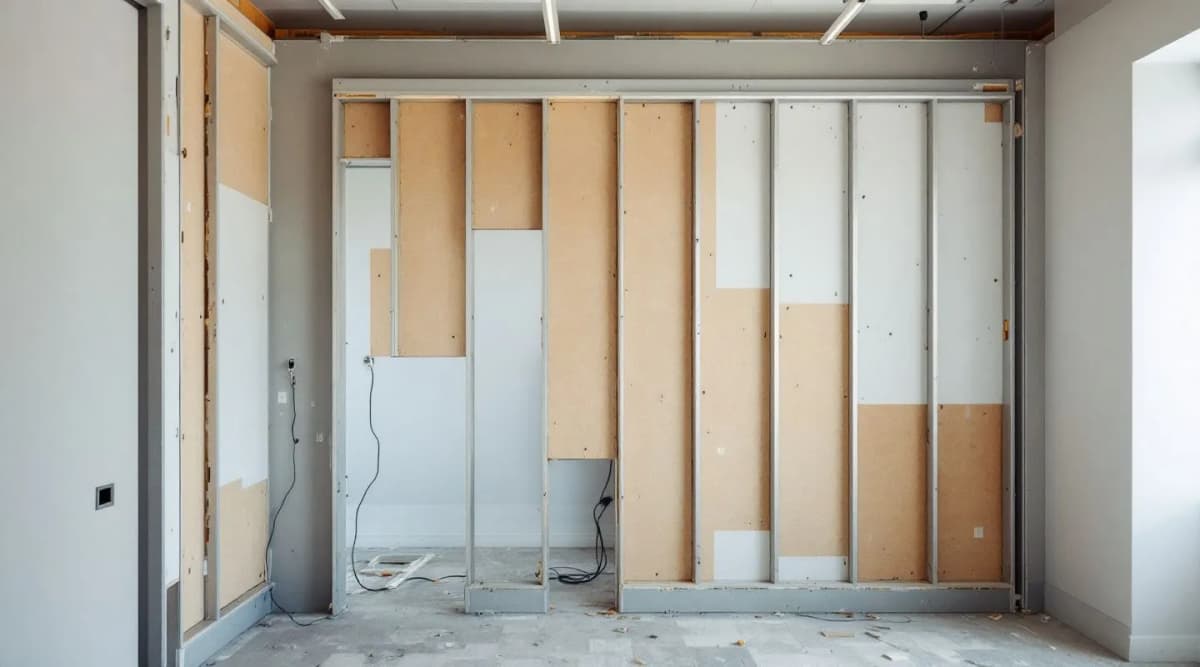
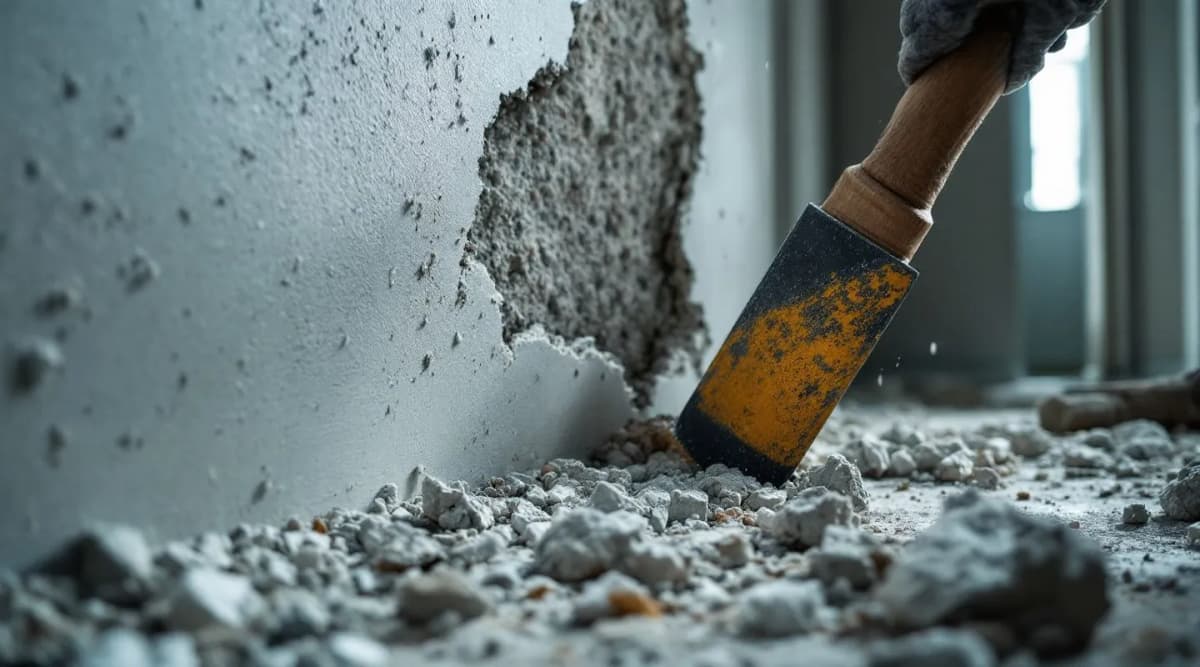
The wall is broken down in controlled sections using the right tools for the material, whether brick, masonry, or drywall. Working in sections limits dust and vibration and keeps neighbouring finishes intact. Drywall partitions come apart faster, as covered in our note on drywall partition removal.
5. Debris haulage
Rubble is bagged and carried out, with disposal booked to a licensed facility and scheduled around building bin and lift access rules. For larger clearances, see our guide to renovation debris disposal.
6. Patching and making good
Once the wall is gone, the exposed floor, ceiling, and adjoining wall edges are patched and made good, ready for skimming, tiling, or painting by your renovation team. This is easy to overlook in a quote, so we set it out up front.
Common mistakes homeowners make
- Assuming a thin wall is non-load-bearing. Wall thickness is a weak signal. Confirm against drawings or a PE.
- Starting before the permit is approved. Hacking without an HDB permit or MCST sign-off risks a stop-work order and reinstatement at your own cost.
- Forgetting the making-good. A cheap quote that stops at demolition leaves you paying separately to patch the floor, ceiling, and wall scars.
- Ignoring embedded services. Cables and pipes hide inside walls, and must be traced and isolated first.
How long the job takes
Timing depends on the wall and the access, not on a fixed clock. A single drywall partition in an easy unit can be a same-day job. A masonry or brick wall with embedded services, hoarding, and a long haulage route runs longer, and making good adds time on top. Where a PE endorsement is needed, the assessment and approval usually add more calendar time than the demolition ever does. We give a realistic schedule with the quote.
How much partition wall removal costs
Cost depends on the wall, not a flat rate. As an indicative guide for masonry and brick partition removal:
| Item | Indicative range |
|---|---|
| Per wall | S$400 to S$1,200 |
| Per square metre | S$25 to S$60 |
These are indicative figures. The exact price comes from a site quote, because several factors move it up or down:
- Wall size and material. Larger walls and dense masonry take longer than a thin partition.
- Embedded services. Wiring, plumbing, or pipes inside the wall must be isolated or rerouted first.
- Access and floor level. Tight access, high floors, and long haulage routes add labour.
- Debris disposal. Volume and disposal fees scale with the rubble removed.
- After-hours work. Commercial buildings and some condos restrict hacking to evenings or weekends.
A load-bearing wall is a different scope, since it involves PE assessment and any structural support the engineer specifies. We price that separately once the endorsement defines the works.
Frequently asked questions
Do I need HDB approval to remove a partition wall?
For most partition walls in an HDB flat, yes. You need a renovation permit and an HDB-registered contractor. If the wall is structural, a PE endorsement is required first.
Can I remove a load-bearing wall?
Not without a PE. The engineer decides whether it can be removed or opened up and specifies any beam or support needed to carry the load. That endorsement makes the work legal and safe.
How do I know if my wall is load-bearing?
Do not rely on tapping it. The reliable checks are the approved structural drawings and a PE's on-site assessment, which we confirm before quoting.
Get a quote
Tell us the wall, the location, and whether it is HDB, private, or commercial, and we will confirm the type, the permit position, and an indicative price. We reply within 24 hours on business days.
- Email: hello@hacking.sg
- WhatsApp: (+65) 8484 0027