Drywall Partition Removal in Singapore: Process and Cost

Jeff Kang
Drywall partitions are one of the most common walls we take down. They go up quickly during a fit-out, and they come down just as often when a space is re-planned. Because they are non-structural, drywall removal is generally faster and cheaper than taking out a brick or masonry wall. Here is how the work is done, what to watch for, and what it typically costs in Singapore.
What a drywall partition is
A drywall partition, sometimes called a plasterboard or gypsum partition, is a lightweight wall built from boards fixed to a frame. Nothing in this wall carries the load of the building above it, which is the key difference from a brick or concrete wall.
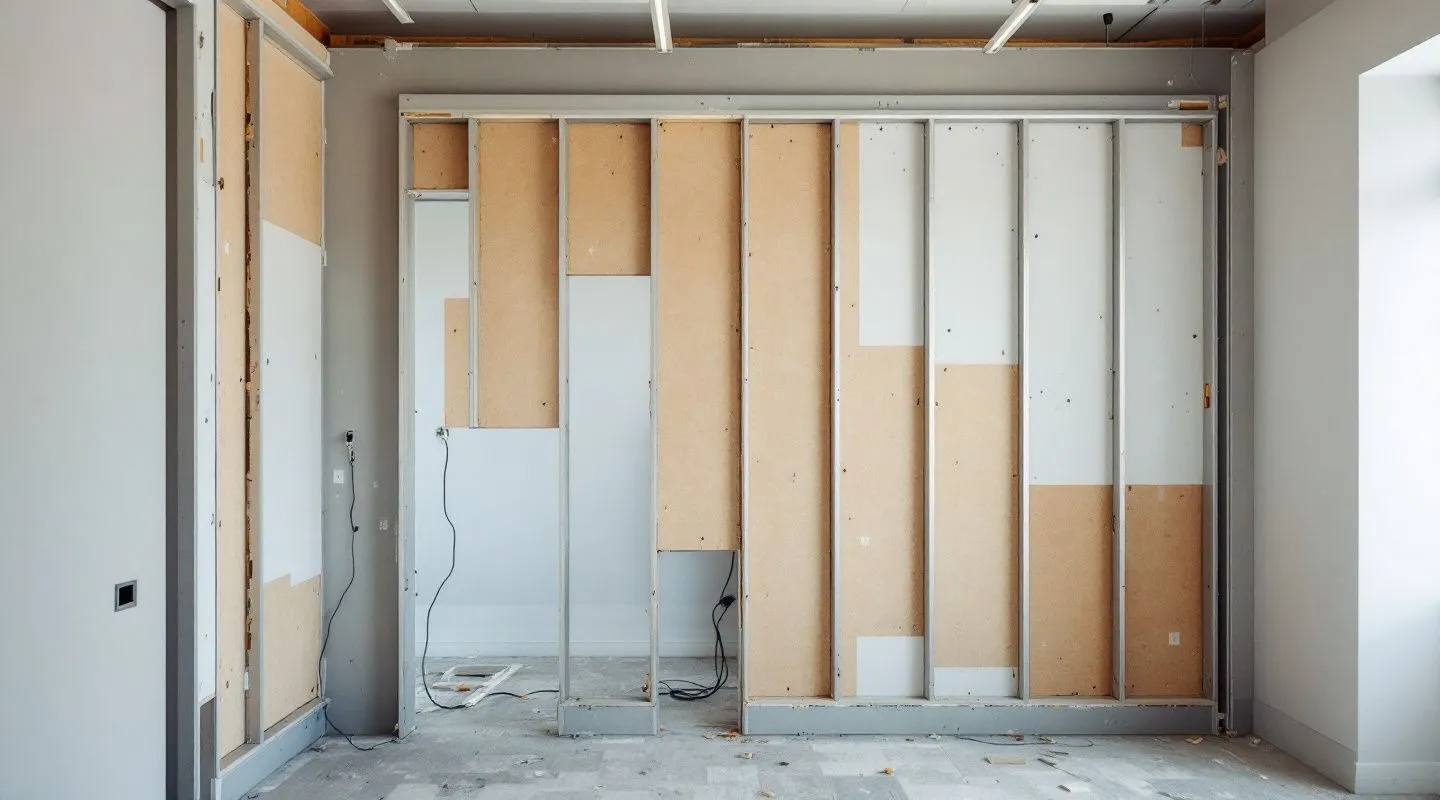
Peel back the surface and a standard partition is three layers working together:
- The frame. Vertical studs run between a track fixed to the floor and one fixed to the ceiling, usually at 400mm or 600mm centres.
- The boards. Plasterboard is screwed to both faces of the frame, a single layer each side or two for extra mass.
- The cavity. The gap may sit empty, or hold acoustic insulation, fire-rated infill, and the cabling that services the space.
That non-structural nature shapes the whole removal job: less noise, less debris, and less time on site.
Framing types and why they matter
The frame decides how the wall comes apart. Two systems turn up in Singapore offices and homes:
- Metal stud. Galvanised steel studs and tracks, the standard in commercial fit-outs. The steel is light, unscrews cleanly, and can sometimes be salvaged if the client is re-partitioning elsewhere.
- Timber stud. Softwood battens, more common in older homes and small residential jobs. Timber is heavier and often nailed rather than screwed, so it takes more prying to release.
Knowing the frame tells us what tools to bring and how much time to book: a screwed metal frame drops quickly, a nailed timber one asks for more patience.
When people remove them
We are usually called in for one of a few reasons:
- Office re-layout. A team grows or shrinks, and meeting rooms make way for open-plan seating.
- Reinstatement. A tenant hands back a unit and the lease requires the space returned to bare condition, part of a full office reinstatement.
- Opening up space. A homeowner or business wants two rooms combined into one.
For lease hand-backs, the removal is part of a wider wall hacking services scope, and getting it right avoids disputes over the security deposit.
The removal process
Every drywall partition is different, but the sequence is broadly the same:
- Locate services and cabling. Before anything is cut, we check for what runs inside or across the wall: power, data, lighting switches, and audio-visual lines. This step protects the rest of the fit-out.
- Disconnect. A licensed electrician isolates and disconnects power. Data and AV cabling is capped, re-routed, or safely coiled back for reuse.
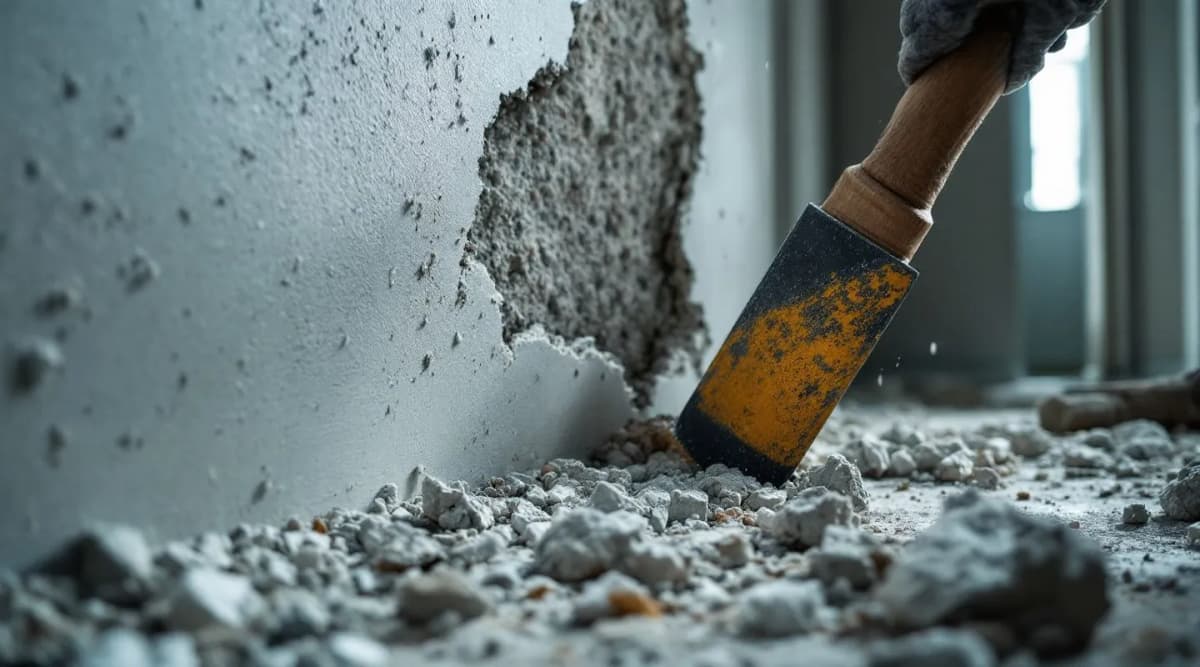
- Remove the boards. We take off the plasterboard face first, working in manageable sections rather than smashing it. Score, cut, and lift keeps dust down and shows what sits in the cavity.
- Dismantle the framing. With the boards clear, we unscrew the studs, then release the floor and ceiling tracks. Any insulation is pulled and bagged. Skirting, cornices, and trims come off with it.
- Dispose. Board, framing, and insulation are bagged and cleared. Drywall waste is bulky but light, so disposal is straightforward.
- Make good. We patch the floor, ceiling, and adjacent walls where the partition was tied in. That means filling the screw holes and track lines, sanding flush, and leaving the surfaces ready for paint or flooring. This is what separates a tidy job from a rough one.
Handling cabling inside office partitions
The biggest risk in an office is what lives inside the partition. Data drops, power sockets, and audio-visual runs are routinely chased into these walls, so cut blind and you can sever a live circuit or a network backbone the office depends on.
We treat every office partition as though it carries services until proven otherwise. In practice that means three things:
- Trace before cutting. We follow each socket, faceplate, and cable entry back to work out what is live and where it goes.
- Disconnect properly. A licensed electrician isolates power at the board, never at the socket alone.
- Preserve what is kept. Cabling to be reused is labelled, coiled, and set aside; runs passing through to another area are re-routed so neighbouring desks stay online.
It adds a little time, but it prevents the far costlier problem of an unplanned outage.
Acoustic and fire-rated partitions
Not every partition is a plain single-board wall. Two special cases need extra handling, and both cost more to take down.
- Acoustic partitions. Built for meeting rooms and boardrooms, these carry dense mineral-wool insulation and often a double layer of board each side. More mass means more weight to handle and more waste to clear.
- Fire-rated partitions. Used along escape corridors and between tenancies, these use fire-rated board, sometimes doubled, with fire-stopping packed around every service penetration. They are heavier and slower to strip.
If your wall feels unusually solid or thick when you knock it, tell us up front: it changes the labour, disposal, and quote.
Drywall vs masonry vs glass removal
| Factor | Drywall partition | Brick / masonry wall | Glass partition |
|---|---|---|---|
| Structural role | Non-structural | Sometimes structural | Non-structural |
| Weight and debris | Light, low volume | Heavy, high volume | Moderate, panels |
| Noise and dust | Lower | Higher | Low, but fragile |
| Time on site | Shorter | Longer | Short with care |
| Making good | Patch and skim | Heavier reinstatement | Minimal at floor and ceiling tracks |
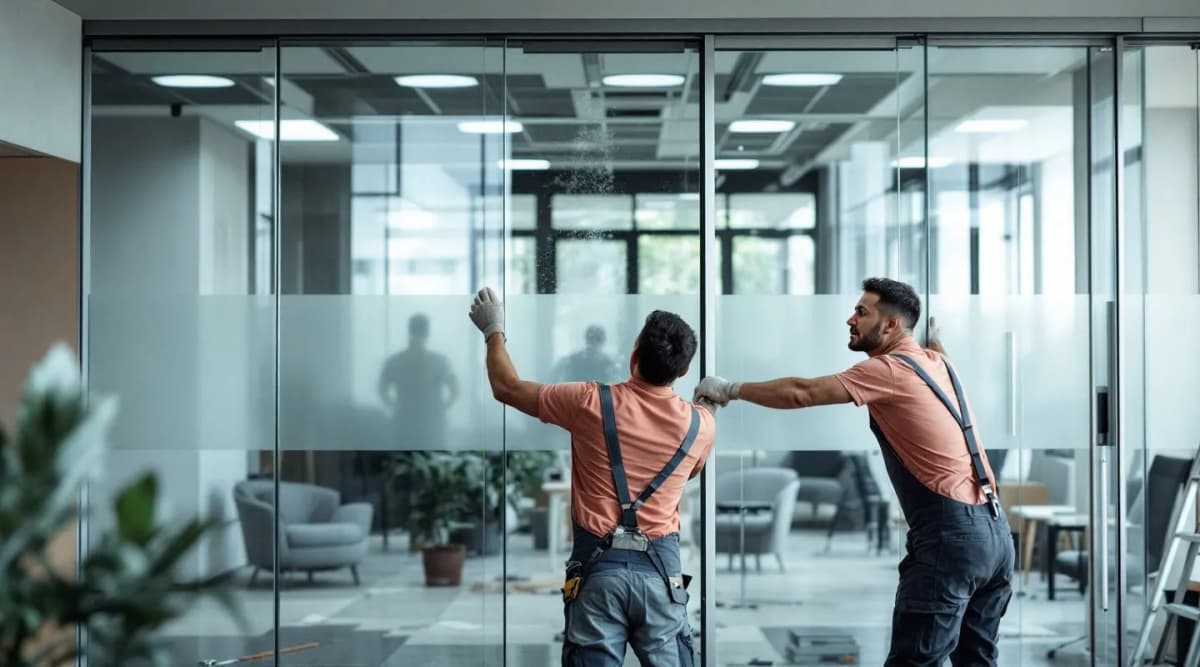
| Reuse | Frame sometimes salvageable | None | Panels and frames often reusable |
| Cost | Lower | Higher | Varies with system |
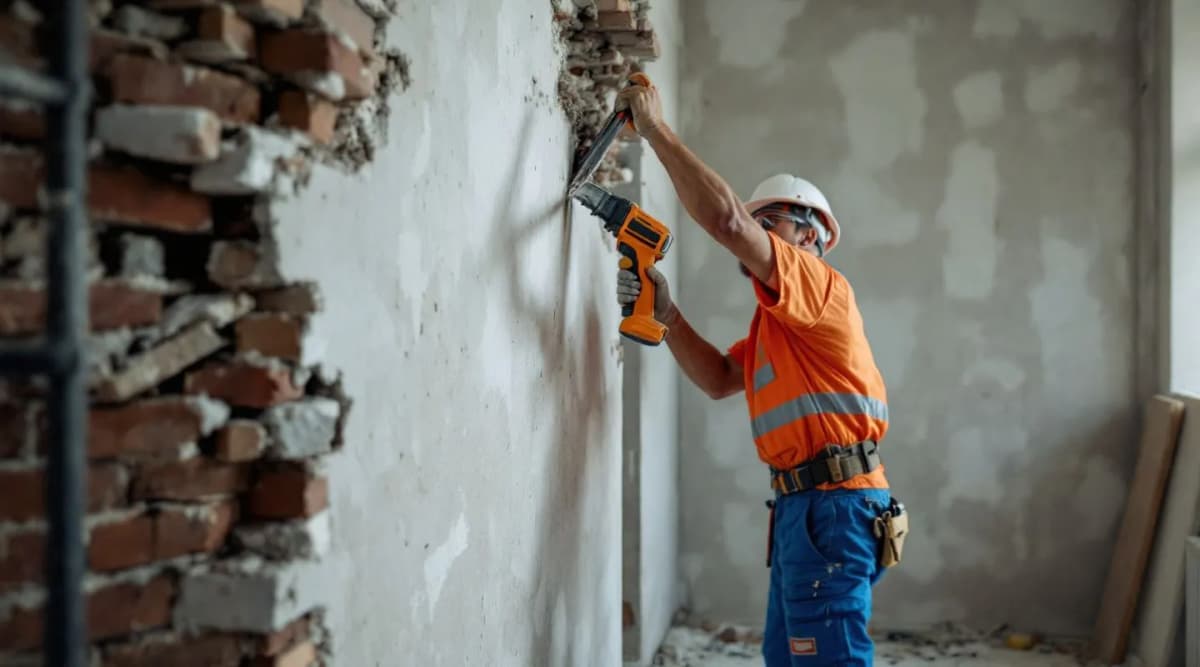
If your wall is brick rather than plasterboard, the approach and pricing change. Our guide on how to remove a partition wall covers both, and if you are dealing with a glass system instead, see glass partition removal.
Cost
Pricing depends on the wall, but as an indicative guide for Singapore:
- Per square metre: drywall partition removal runs about S$15 to S$35 per square metre.
- Per wall: for a typical HDB or office partition, roughly S$200 to S$400 per wall.
The main cost drivers are:
- Wall height. Taller partitions running to a high ceiling take more time and access equipment.
- Framing complexity. Insulation and fire-rated boards add labour.
- Cabling inside. Live services that must be traced, disconnected, and preserved add time and need an electrician.
- Disposal. Volume of waste and site access affect clearance cost.
The right number depends on the wall in front of us, so a quick site check gives you a firm quote.
Frequently asked questions
How long does it take to remove a drywall partition?
A single, straightforward partition often comes down in half a day, including making good. Add time if the wall is tall, carries live cabling, or turns out to be acoustic or fire-rated. A site check gives you a realistic window rather than a guess.
Will removal leave marks on the floor and ceiling?
Not if the making good is done properly. The partition is tied in along the floor and ceiling tracks, so those lines are filled, sanded, and left ready for paint or new flooring. We treat that as part of the job, not an extra.
Can the cabling inside be saved?
Yes, in most cases. Network and audio-visual runs you want to keep are traced, labelled, and coiled back rather than cut, with power isolated at the board first. Tell us what to keep before we start.
Get a quote
Planning a re-layout, a reinstatement, or simply want a partition gone? We are happy to take a look and price it up. Send us the details and we will come back with a quote within 24 hours on business days.
Email us at hello@hacking.sg or WhatsApp us at (+65) 8484 0027.