Wall Hacking Services in Singapore: What to Know

Jeff Kang
Wall hacking sits at the start of almost every renovation. Before a new layout can take shape, the old one usually has to come down. We have handled hacking works across Singapore since 2015, and this guide covers what wall hacking involves, how each wall material changes the job, how the process runs, the rules, and cost.
What wall hacking is
Wall hacking is the controlled demolition of walls and fixed finishes so a space can be reconfigured or stripped back to its structure. Done properly, it protects the surrounding building, keeps dust and debris under control, and leaves clean edges for the trades that follow.
Wall hacking is not full demolition. Full demolition levels an entire structure, often with heavy machinery; wall hacking is surgical, taking out specific walls, openings, or finishes while the rest of the unit stays intact. That difference shapes everything downstream, from the tools we bring to how we protect the site.
Common wall hacking jobs
Most requests fall into a few categories:
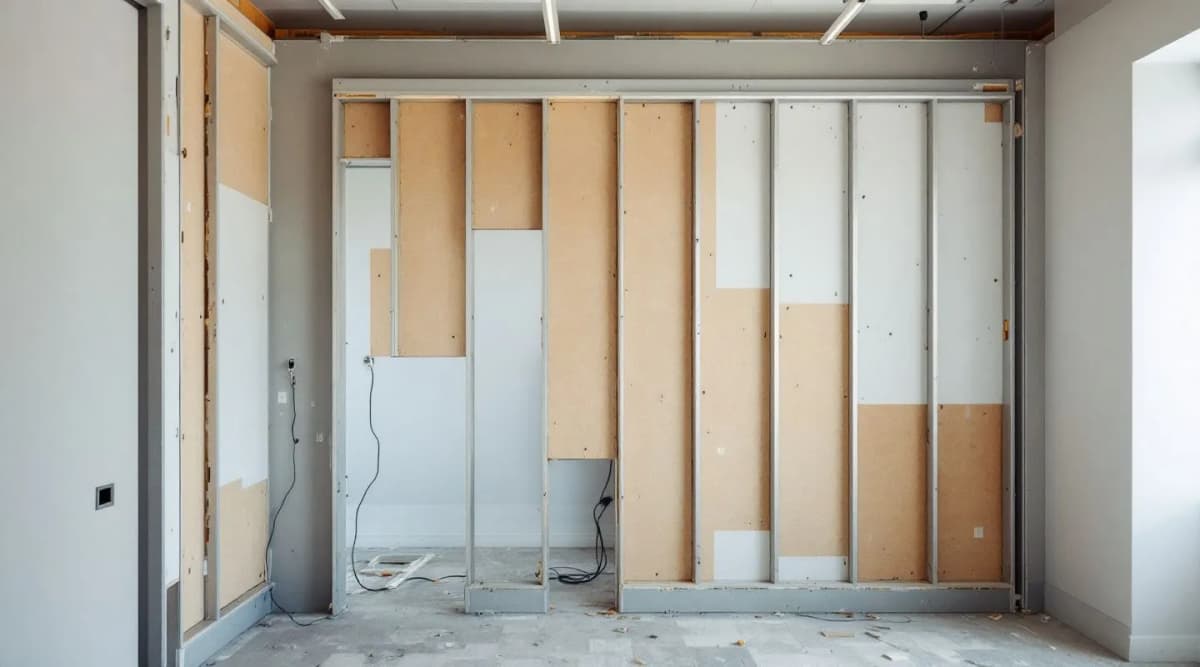
- Removing partitions: taking out non-structural dividers to combine rooms or free up floor area.
- Opening up layouts: widening doorways, forming new openings, or merging a kitchen and living space.
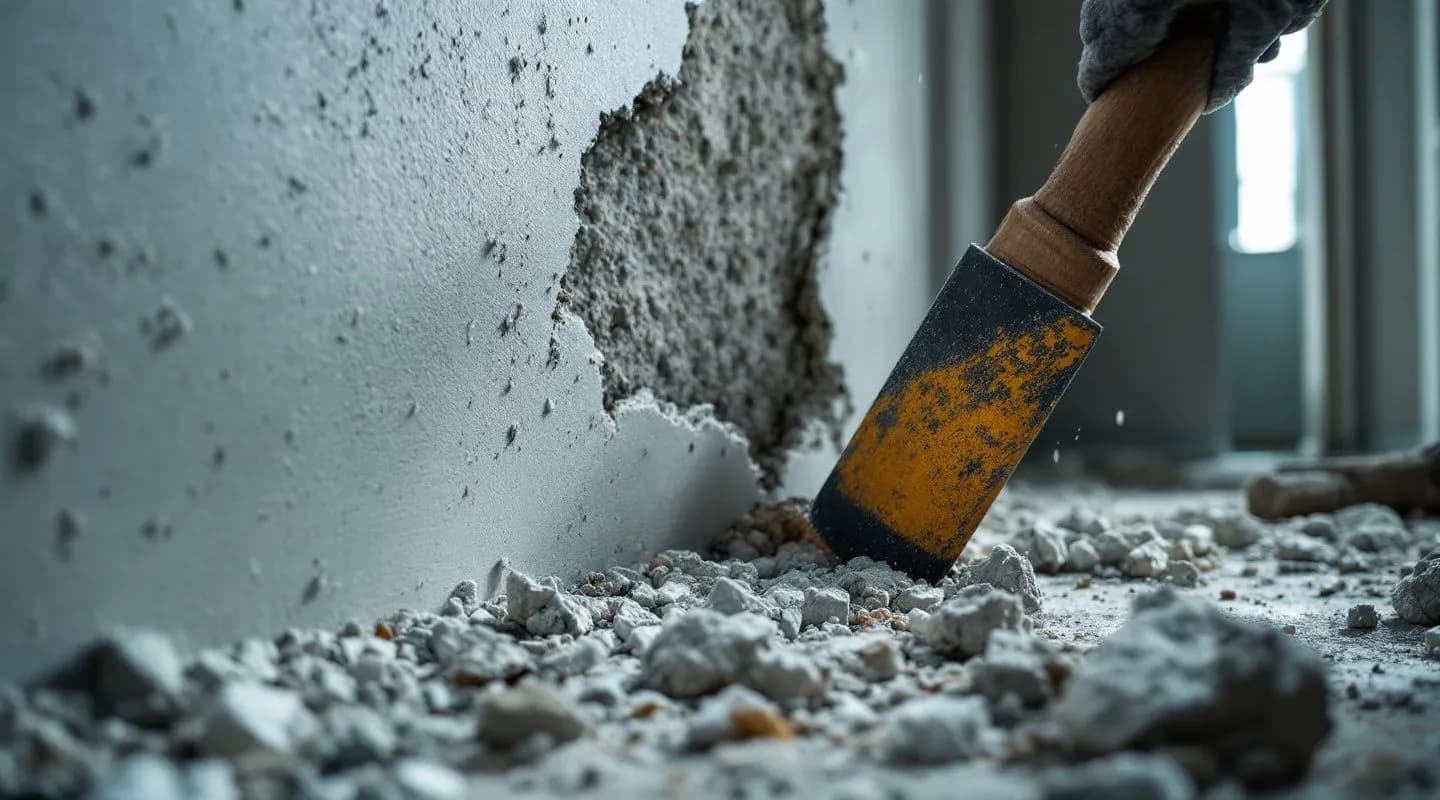
- Tile and finish removal: stripping wall and floor tiles, screed, plaster, and old cladding back to the substrate, covered by our floor tile hacking service.
- Pre-renovation strip-out: clearing an entire unit of partitions, fittings, and finishes before a full fit-out.
For a closer look at one of these, see our guide on how to remove a partition wall.
How wall material changes the job
The biggest driver of effort and cost is what the wall is made of; two walls of the same size can take very different time. Here is how the common ones behave on site.
| Material | Effort | Notes |
|---|---|---|
| Plaster and partition board | Low | Comes off fast, minimal noise, low debris volume. |
| Hollow block | Moderate | Lightweight cores hack quickly but crumble, so dust control matters. |
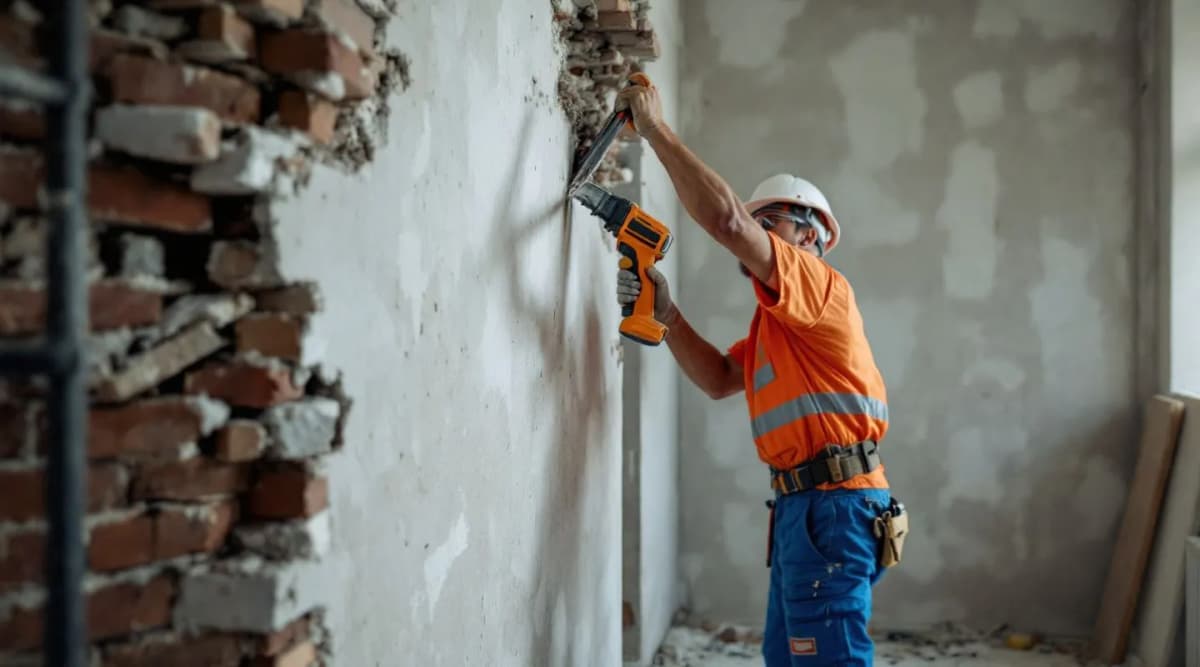
| Brick | High | Heavier, denser, more debris to bag and cart out. |
| Reinforced concrete | Very high | Steel rebar inside means cutting, not just hacking; slow and demanding. |
Plaster and light partition board come down in sheets with little rubble. Hollow block, the common infill in many local units, sits in the middle: the cores break easily but throw a lot of dust. Reinforced concrete is the most demanding, and it is where most walls turn out to be structural. The steel bars inside cannot be knocked through, so the work shifts from hacking to cutting, and where the wall carries load it needs a Professional Engineer's sign-off before anyone starts.
Residential versus commercial hacking
Residential (HDB and condo). In homes, the main concern is which walls can come down. Non-load-bearing walls can usually be hacked once the permit is approved. Load-bearing walls, columns, beams, and reinforced concrete walls generally cannot be hacked at all: they need a Professional Engineer to assess, and HDB rarely approves their removal. In an HDB flat you need a renovation permit before any hacking begins, structural or not. Condos add another layer: the MCST and building management set their own renovation rules, deposits, and working hours on top of anything statutory. For the full picture, read our HDB hacking permit and PE endorsement guide.
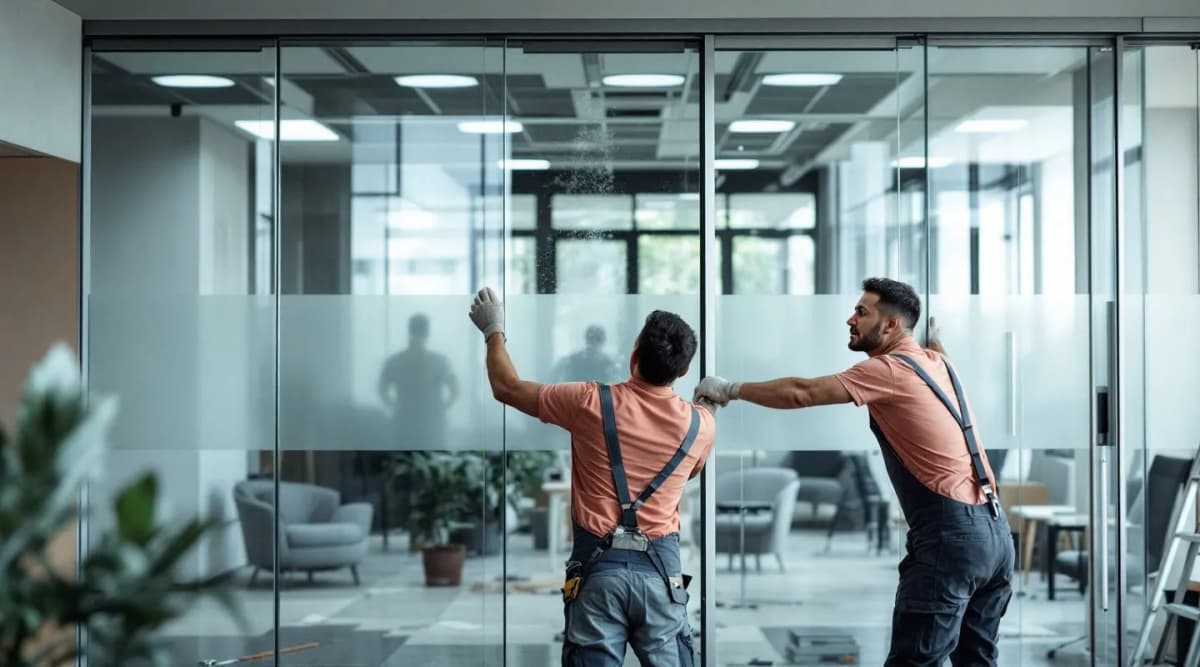
Commercial. Offices, retail units, and F&B spaces usually involve larger partition runs, suspended ceilings, and embedded services such as data cabling, sprinklers, and ductwork. Building management holds the ground rules here, and they tend to be strict: approved contractor lists, insurance, hoarding, and fixed hacking windows. Work is often scheduled after hours to avoid disrupting neighbours, which adds cost. The permit question still applies: a commercial partition can be structural just as easily as one in a flat.
The wall hacking process
Every job runs through the same core steps, scaled to size:
- Assessment. We inspect the walls, identify what is structural, check the material, and look for embedded services. This is where load-bearing constraints and permit needs are confirmed before anything is committed.
- Permit and PE endorsement where needed. In an HDB flat, any wall hacking needs a renovation permit before work starts, load-bearing or not. Structural work needs a Professional Engineer's endorsement on top of that. Non-load-bearing walls skip the PE step once the assessment confirms they carry no load, but the permit still applies.
- Protection. Floors, lifts, common corridors, and anything staying in place are covered and sealed. Dust screens go up to contain debris, and we mask off the openings so fine dust does not travel through the unit.
- Hacking. The demolition itself, done in a controlled sequence with the right tools for the material, whether that is a chisel for plaster or a cutter for reinforced concrete.
- Debris disposal. Rubble is bagged, removed, and disposed of responsibly through our dismantling and disposal services.
- Making good. Exposed edges, floors, and adjacent surfaces are patched and cleaned so the next trade can start on a tidy site.
Safety and building rules
Wall hacking is noisy, dusty work, and building management rules keep it manageable. Points to plan around:
- MCST and building management approval. Condos and commercial buildings almost always require you to submit a renovation application and deposit before work starts.
- Noise and timing. Hacking is typically restricted to weekday working hours, with tighter windows on weekends and none on public holidays. Rules vary by estate, so we confirm the permitted hours for your building before we schedule anything.
- Protection of common areas. Lift lobbies, corridors, and shared walls must be protected, and any damage is your responsibility.
- Dust and site safety. Sealed screens, proper masks, and a clean-as-you-go approach keep the site safe for our crew and liveable for your neighbours.
We coordinate these approvals as part of the job.
What wall hacking costs
Pricing depends on the wall, the quantity, and the site, so treat the figures below as indicative.
| Scope | Indicative cost |
|---|---|
| Simple non-load-bearing wall hacking | About S$300 to S$900 per wall |
| Larger office partition hacking | Up to about S$1,500 per wall |
| Larger strip-out (by area) | Roughly S$3 to S$8 per square foot |
The main cost drivers are:
- Wall material. Plaster and light partition board hack out quickly. Brick takes longer, and reinforced concrete is the most demanding.
- Quantity. More walls or larger areas bring the per-unit rate down but raise the total.
- Embedded services. Cabling, pipes, and conduits inside a wall need careful, slower work.
- Access. High floors, tight corridors, and long carry distances for debris add time.
- Disposal. Volume and type of debris affect removal cost.
- After-hours work. Night and weekend jobs in commercial buildings carry a premium.
A short site assessment is the only reliable way to pin down a number: two walls of the same length can differ once material and services are factored in.
Frequently asked questions
Can I hack any wall in my flat? No. Non-load-bearing walls can usually be hacked once the permit is approved. Load-bearing, column, beam, and reinforced concrete walls generally cannot be removed at all, and HDB rarely approves. Either way, an HDB flat needs a renovation permit before any hacking starts. We confirm which is which during the assessment.
How do I know if a wall is load-bearing? You often cannot tell by looking, which is exactly why the assessment matters. Thickness and material are hints, but the reliable answer comes from checking the structural drawings and, where there is any doubt, a Professional Engineer's review.
How long does a typical job take? A single non-structural wall in a flat is often a same-day job. Larger strip-outs, reinforced concrete, or after-hours commercial work run longer, and we give you a realistic schedule once we have seen the site.
Talk to us
If you have a wall hacking or strip-out job in mind, we can help you scope it, sort out any permit or PE requirements, and give you a clear price. Send us the details and we will get back to you with a quote within 24 hours on business days.
Email hello@hacking.sg or WhatsApp us at (+65) 8484 0027.