
Construction Site Hoarding in Singapore: A Practical Guide

Jeff Kang
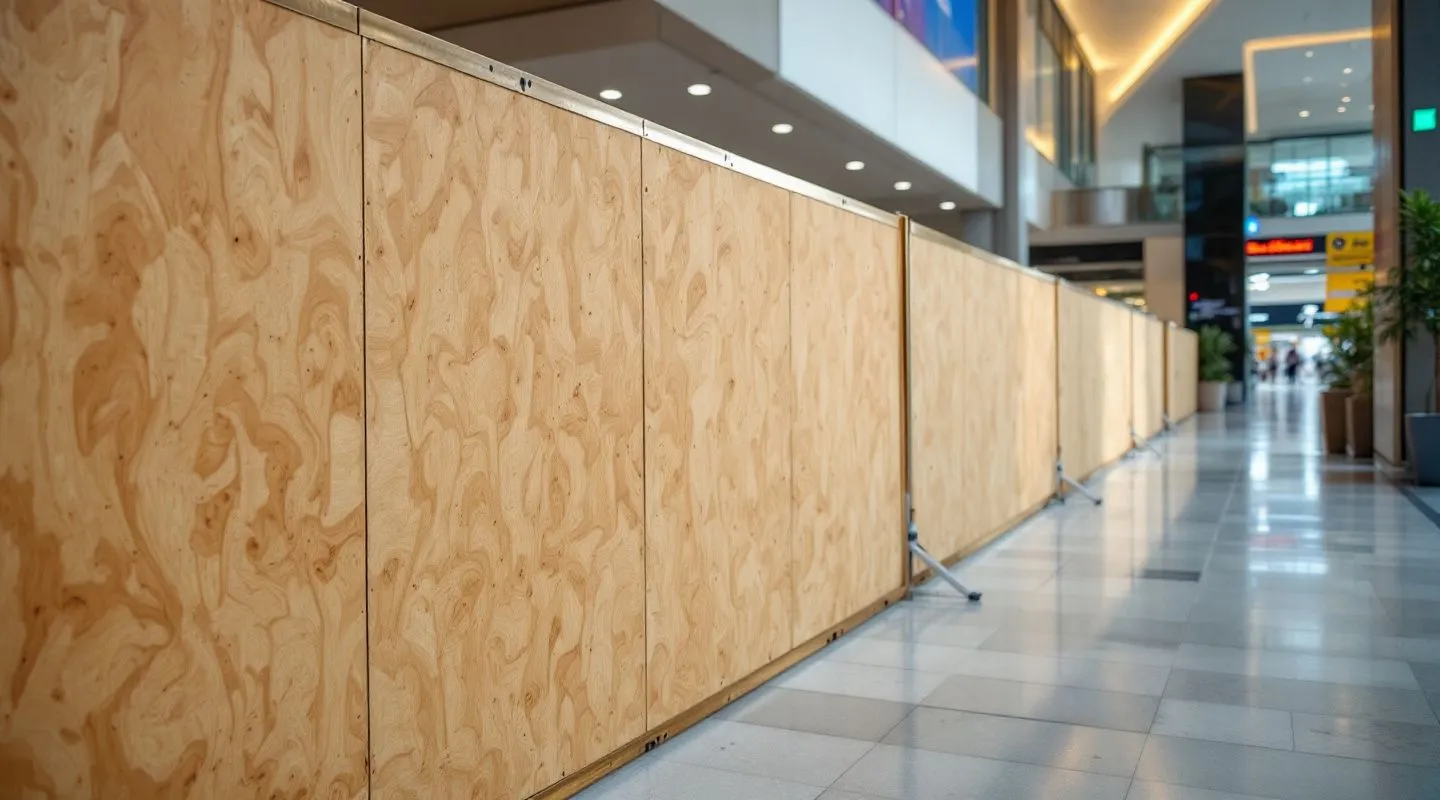
If you have walked past a shopfront being fitted out in a Singapore mall, you have seen construction site hoarding: the timber or metal barrier that seals off the work zone from the public. On most renovation and reinstatement jobs it goes up first and comes down last. This guide covers what hoarding is, where it is expected, the main types, what a good one includes, and what it costs.
What construction site hoarding is
Construction site hoarding is a temporary perimeter barrier that separates an active work area from occupied or public space. On our projects it serves four purposes at once:
- Safety. It keeps the public, tenants, and passers-by out of the work zone and away from tools, power leads, and open floors.
- Dust and debris containment. Reinstatement and demolition and disposal work generate a lot of dust. A sealed hoarding line stops it from drifting into neighbouring units, walkways, and air-conditioning systems.
- Security. It protects materials, equipment, and part-finished work outside working hours.
- Aesthetics. In a live mall or office, hoarding hides the mess and keeps the surroundings looking presentable while work goes on behind it.
Where hoarding is expected
Whether you need hoarding, and how it must be built, usually comes down to where the work is and who manages the space. The busier the setting, the stricter the expectation. Common settings include:
- Shopping malls and retail units. Almost always mandatory. Foot traffic is heavy and shoppers walk within an arm's length of your unit, so mall management sets its own hoarding standards, printing requirements, and inspection rules.
- Offices and commercial buildings. Required where work sits next to occupied tenancies or shared corridors, as on most commercial reinstatement jobs. Neighbouring tenants are still working, so dust control and a tidy boundary matter as much as safety.
- HDB and residential common areas. Where work spills into corridors, lift lobbies, or void decks, the town council or managing agent will usually require the common area to be hoarded and protected so residents keep clear access.
- Active construction sites and larger fit-outs. Site perimeters are hoarded to control who gets in, contain the work, and keep the public safely on the other side.
Requirements vary by building and authority, so we always confirm the exact specification with building management before we build. Treat the notes here as general guidance, not a fixed rulebook.
Types of hoarding
There are two types we use most often.
Timber or plywood hoarding. A framed plywood wall, usually painted or wrapped with printed graphics. It is quick to put up, easy to modify on site, and takes branding well. It suits shorter jobs and interior fit-outs.
Galvanised metal panel hoarding. Interlocking galvanised steel panels on posts. It is more durable and reusable, and it stands up to weather and knocks better than plywood, which suits longer projects and outdoor perimeters.
Here is how the two compare on the points that decide most jobs:
| Factor | Timber or plywood | Galvanised metal panel |
|---|---|---|
| Upfront cost | Lower | Higher |
| Durability | Good for short runs | Handles weather, knocks, and long projects |
| Appearance | Paints and wraps cleanly, looks finished | Functional, industrial unless wrapped |
| Reuse | Limited, often one job | Panels demount and redeploy many times |
| Best use | Interior mall and office fit-outs, short jobs | Outdoor perimeters, long jobs, high-traffic edges |
For a short shop fit-out inside a mall, timber usually wins on cost and appearance; for a long outdoor perimeter, metal earns its higher price.
What good hoarding includes
A hoarding line is more than a wall. When we install one, we look for:
- Adequate height and coverage. Tall enough to screen the work fully and meet the building's requirement, with no gaps at the top or sides.
- Stability. Properly braced and fixed so it does not lean, shift, or topple when it is brushed and leaned against all day.
- Access doors. Lockable doors sized for people and materials, positioned to keep foot traffic clear of the public.
- Protection of common areas. Floor protection, corner guards, and clean sealing where the hoarding meets existing finishes, so the space is handed back undamaged.
- Dust containment. Sealed joints and a tight fit to the floor, so debris and fine dust stay inside the line rather than settling on shopfronts and walkways next door.
- Printed graphics (optional). Many malls require the outward face to be wrapped, whether with plain colour, the tenant's branding, or a "coming soon" design.
How hoarding fits into a project
On a renovation or reinstatement job, hoarding is an early step. We set the line, install access, and seal the perimeter before the messy work begins, then remove it once the space is clean and ready for handover. Damaged corridors or lobbies can hold up your handover and eat into your deposit, so the barrier that protects them earns its keep.
Duration shapes how you source it. For a short interior fit-out, building a timber line and dismantling it at the end is usually sensible. For a long or multi-phase project, rented metal panels can work out cheaper than building and rebuilding, so weigh rental against a build at the quoting stage rather than defaulting to either.
Safety and public access matter throughout. The hoarding must keep pedestrians moving freely past your site, never pinching a walkway or blocking an escape route, and access doors must open into your work zone, not into the crowd. In shared blocks, corridors and lift lobbies stay usable for residents, and building management inspects for it.
If you are planning reinstatement, our guide to reinstatement works: a complete guide shows how these stages fit together. And because the same contractor often handles the hoarding, demolition, and making-good, our notes on how to choose a demolition contractor are worth a read before you appoint anyone.
What hoarding costs
Hoarding is priced per site, because the cost scales with the length of the run, the height, the specification, and how long it stays up. Rather than quote a rate that rarely fits, we price it after confirming your run and the building's requirements.
The main cost drivers are:
- Height and specification. Taller or heavier-duty builds cost more.
- Fixing method. How the hoarding is anchored, and how much reinstatement that needs afterwards.
- Duration. Longer hires and longer projects add up.
- Graphics and branding. Printed wraps and custom designs add to the base cost.
- Location. Access, working hours, and building rules all affect the price.
Frequently asked questions
How long does it take to put up hoarding?
For a typical mall unit or office fit-out, a straightforward timber line goes up in a day or two, depending on the length of the run, the access doors needed, and whether the face has to be wrapped. Longer perimeters and metal systems take a little more.
Do I have to use printed graphics on the hoarding?
Not always, but many malls insist on it. Management often requires the public-facing side to be wrapped in plain colour, your branding, or a "coming soon" design. Check your building's rules before you assume a plain painted face will pass.
Should I rent metal panels or build a timber hoarding?
It depends on the job. Short interior fit-outs suit a purpose-built timber line that comes down at the end. Long, outdoor, or multi-phase projects can be cheaper with rented metal panels. We weigh both at the quoting stage and recommend whichever costs you less.
Talk to us
Every hoarding job is a little different, so the surest way to get an accurate figure is to tell us about your site. Send the location, rough dimensions, and how long the work will run, and we will come back with a quote. We aim to respond within 24 hours on business days.
Reach us at hello@hacking.sg or on WhatsApp at (+65) 8484 0027.