Reinstatement Works in Singapore: A Complete Guide

Jeff Kang
Most leases in Singapore carry a reinstatement clause, and it usually surfaces only when the lease is ending and the deadline is tight. We have handled reinstatement works since 2015 across offices, shops, restaurants, factories, and HDB units. This guide covers what reinstatement is, how the tenancy agreement defines your obligation, how scope differs by space type, the process, and cost.
What reinstatement means and why it is required
Reinstatement is returning a leased space to its original condition so it can be handed back to the landlord in a compliant state. The original condition is defined by your tenancy agreement, the handover photos, and any approved fit-out drawings from when you moved in.
It is a contractual obligation, not a courtesy. Miss the agreed standard by the handover date and the landlord can forfeit part or all of your security deposit, back-charge you for their own works, and bill holding-over rent until the unit is accepted.
The tenancy agreement sets the baseline
Every reinstatement job compares two states: the condition you took the unit in, and the condition the landlord expects it back in. That first state is the dilapidation baseline, and the tenancy agreement is where it lives.
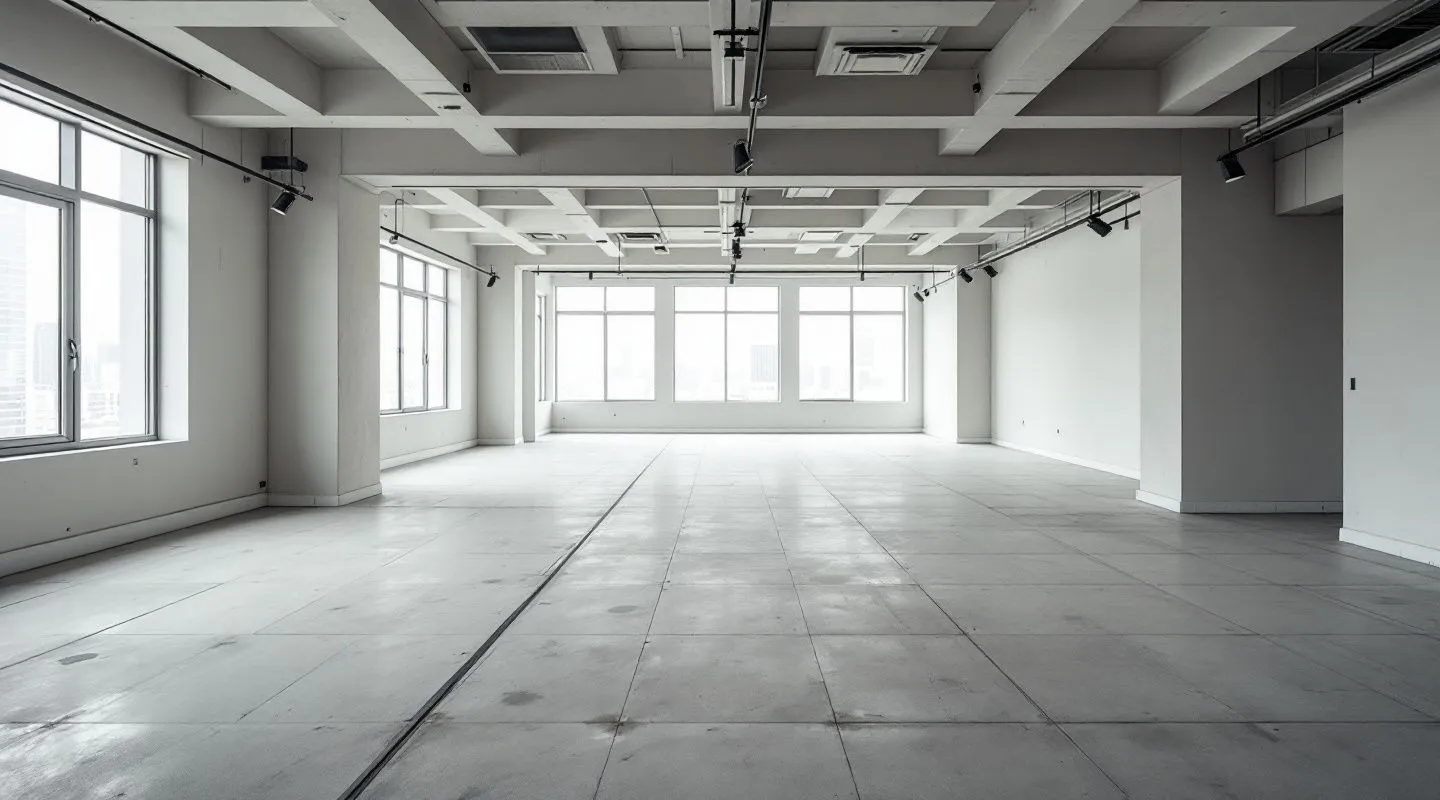
Read the reinstatement clause slowly. It will usually ask for one of three things: a bare shell, base-build or developer's standard, or a specific spec set out in a schedule of condition. A bare shell strips almost everything; base-build keeps the landlord's original ceiling, lighting, and air-conditioning provisions; a schedule of condition ties you to a documented starting point, warts and all. Getting the target wrong by one level can double the scope.
If a dated record exists, photos, an inspection report, and the approved drawings, disputes shrink to almost nothing. Without one, the landlord's memory tends to win. Signing a new lease now? Insist on a joint handover-in inspection and keep the photos.
How reinstatement differs by space type
The core idea is the same everywhere, but scope, approvals, and access all vary. Here is what a typical job involves for each.
| Space type | What reinstatement usually involves | Typical complications |
|---|---|---|
| Office | Strip partitions, carpets, ceilings, and cabling; patch and repaint to bare or base-build | Grade A handover standards, lift-lobby protection |
| Retail and shop | Remove shopfronts, display joinery, signage, and feature lighting | Fixed mall handover windows, after-hours-only work |
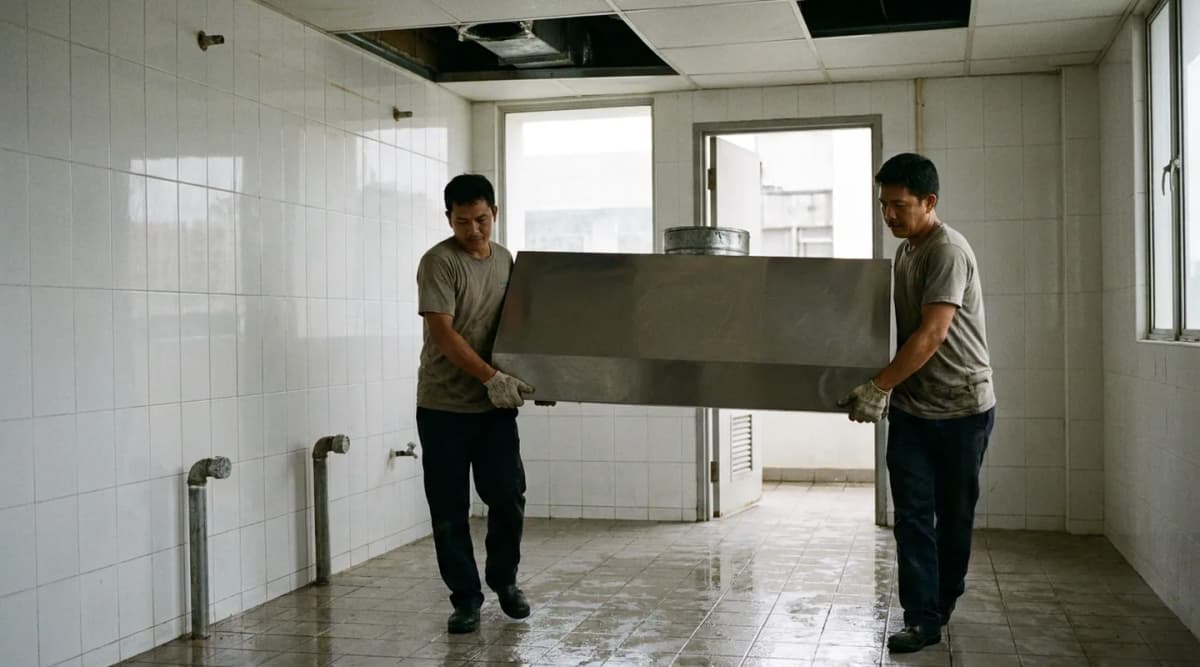
| F&B | Remove exhaust hoods, grease traps, gas piping, cold rooms; make good waterproofing | Heavy M&E, authority approvals, ceiling and floor damage |
| Industrial and JTC | Remove mezzanines, machinery bases, three-phase power, and compressed-air lines | JTC reinstatement standards, structural sign-off |
| HDB | Restore removed non-structural walls, redo flooring, reverse unapproved layouts | HDB approval rules, smaller scope, neighbour access |
Office work is our most common job type, so we keep the detail in our ultimate guide to office reinstatement rather than repeat it here. F&B and industrial jobs carry the heaviest scope and strictest approvals, so they need the most lead time. HDB reinstatement is smaller, but approval rules still govern what can be touched.
The general reinstatement process
Whatever the space, the sequence is consistent.
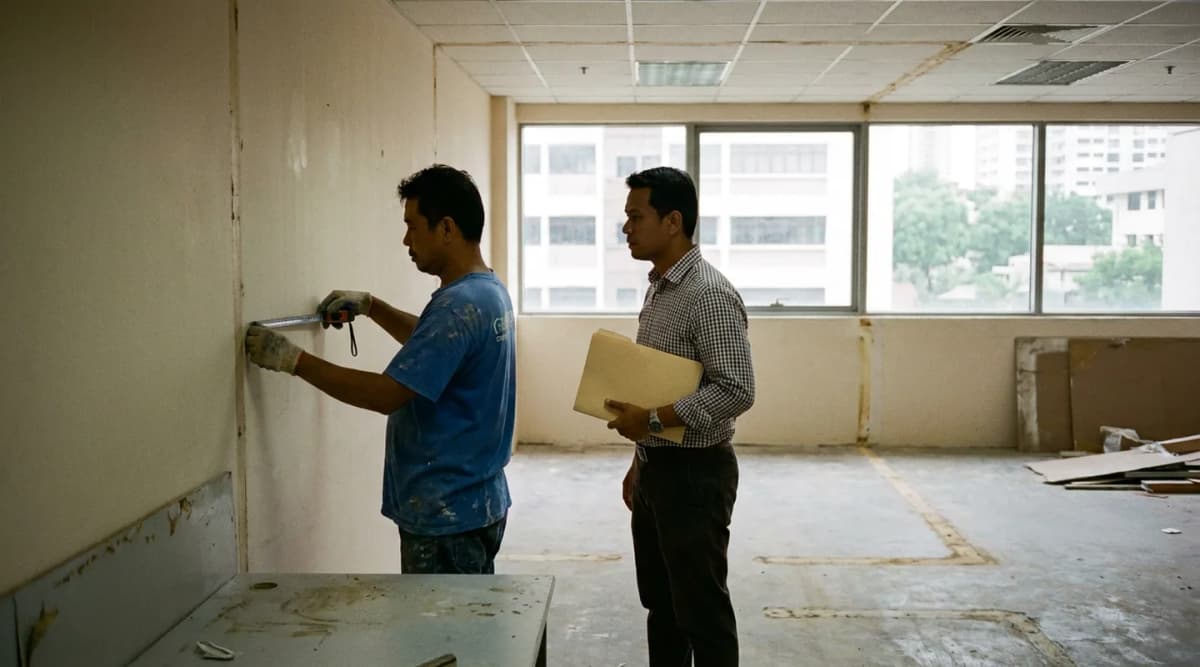
- Site inspection and scope. We compare the current fit-out against the dilapidation baseline and the tenancy clause, then agree exactly what comes out and what stays.
- Permits and Professional Engineer sign-off. Any structural or hacking work involving load-bearing elements needs a PE and the relevant permits before a single wall is touched.
- Hoarding and protection. We protect common areas, lift lobbies, and adjacent units, and set up hoarding where the landlord or building management requires it, since damage to shared areas is charged back fast.
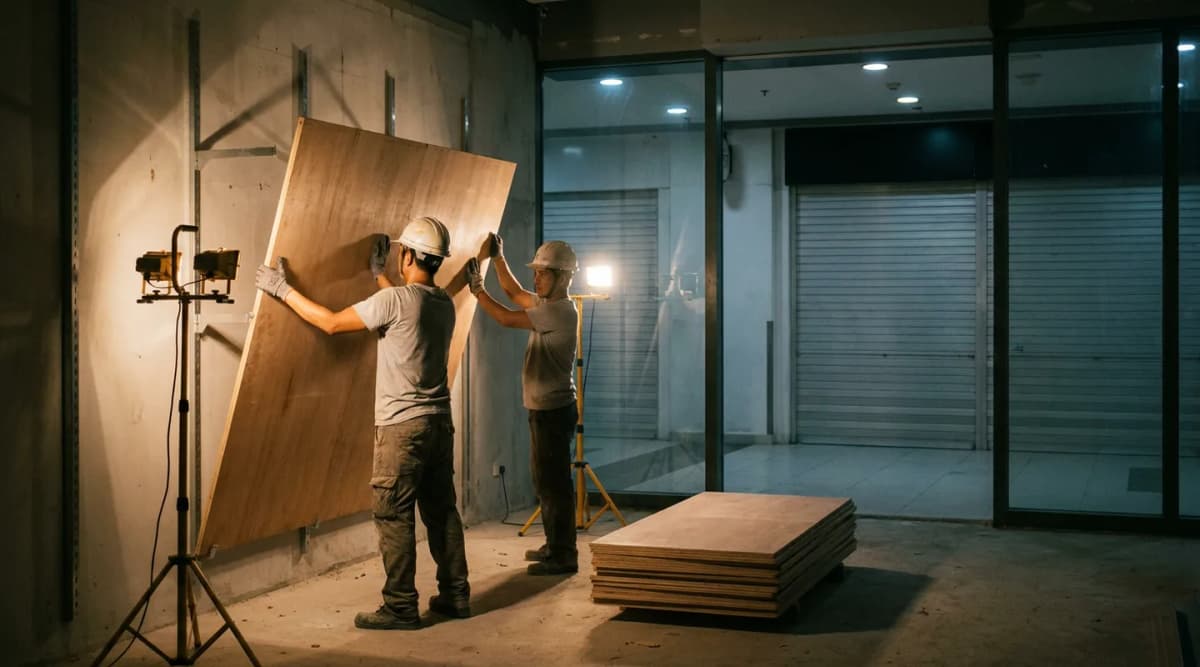
- Hacking and strip-out. Partitions, ceilings, flooring, joinery, and signage come out. On larger sites this phase is the one most bound by after-hours rules.
- M&E removal. Electrical, air-conditioning, plumbing, fire-protection, and data works are disconnected and stripped back to base provisions, then terminated safely.
- Making good. Walls, floors, and ceilings are patched, levelled, and repainted so the space reads as base-build.
- Disposal. Debris is sorted and removed to licensed facilities through our dismantling and disposal services.
- Joint handover inspection. We walk the space with you and the landlord's representative, close any snags, and get written sign-off so the deposit is released.
We handle each of these stages as part of our office reinstatement service.
What drives the timeline
Reinstatement schedules rarely fail on the hacking itself; they fail on everything around it. The main drivers are permit and PE approval lead time, the landlord's access windows, whether work is restricted to nights or weekends, and heavy M&E scope like an F&B kitchen or a lab. Book early: a job that takes two weeks of actual labour can stretch to five once approvals and after-hours-only access are factored in.
How to avoid deposit disputes
Most deposit deductions are avoidable, and most trace back to an unclear original condition. To keep the handover clean:
- Find the handover-in photos and the approved fit-out drawings before scoping anything.
- Read the reinstatement clause word for word, and confirm whether the landlord wants bare shell, base-build, or a specific spec.
- Get the standard in writing, ideally with a marked-up drawing, so both sides agree on the target.
- Keep dated progress photos and the final handover sign-off on file.
Cost overview
Reinstatement is priced by area for commercial and industrial spaces, and per job for HDB. The figures below are indicative; we quote exact after a site inspection.
| Space type | Indicative cost |
|---|---|
| Office and commercial | S$8 to S$20 psf |
| Industrial and JTC factory | S$6 to S$18 psf |
| HDB hacking and reinstatement | S$1,500 to S$4,000 per job |
The main cost drivers are:
- Building grade: Higher-grade buildings carry stricter handover standards and protection requirements.
- Scope and M&E complexity: F&B and lab-type fit-outs cost more than open-plan offices.
- Timeline: Rush jobs and compressed schedules add cost.
- Access and after-hours work: Night or weekend-only access raises labour rates.
- Disposal: Volume and type of debris affect haulage and tipping fees.
For a fuller breakdown of budgeting, see our reinstatement cost guide.
How to choose a contractor
A reinstatement contractor in Singapore should be able to read your tenancy clause, coordinate the PE and permits where structural work is involved, and manage the landlord's handover inspection, not just swing a hammer. Look for:
- A clear, itemised scope tied to your original condition, not a lump-sum guess.
- Proof of past handovers accepted by landlords and building management.
- A realistic schedule that accounts for access windows and after-hours rules.
- Proper protection, hoarding, and licensed disposal built into the quote.
Our approach to commercial reinstatement applies to retail, F&B, industrial, and HDB work too.
Frequently asked questions
Who pays for reinstatement, the tenant or the landlord?
Almost always the tenant. The reinstatement clause sits in your lease as your obligation, so the cost comes from your pocket or your deposit. The landlord only steps in when you miss the deadline, then charges their own works back at a worse rate.
What happens if I do not reinstate before the lease ends?
The landlord can hold your deposit, engage a contractor at your expense, and bill you holding-over rent until the unit is accepted. That combination often costs more than the reinstatement itself, so start early even when the exit date feels far off.
Can I hand back the space as-is if the next tenant wants my fit-out?
Sometimes, but only if the landlord agrees in writing to waive reinstatement. Get the waiver documented before you cancel the works, or you may still be liable if the deal falls through.
Talk to us
If your lease is ending or you have a reinstatement clause to clear, send us the unit details and your handover date. We reply within 24 hours on business days.
- Email: hello@hacking.sg
- WhatsApp: (+65) 8484 0027