Kitchen Dismantling and Removal Services for Residential at Choa Chu Kang
Services Provided
Project Overview
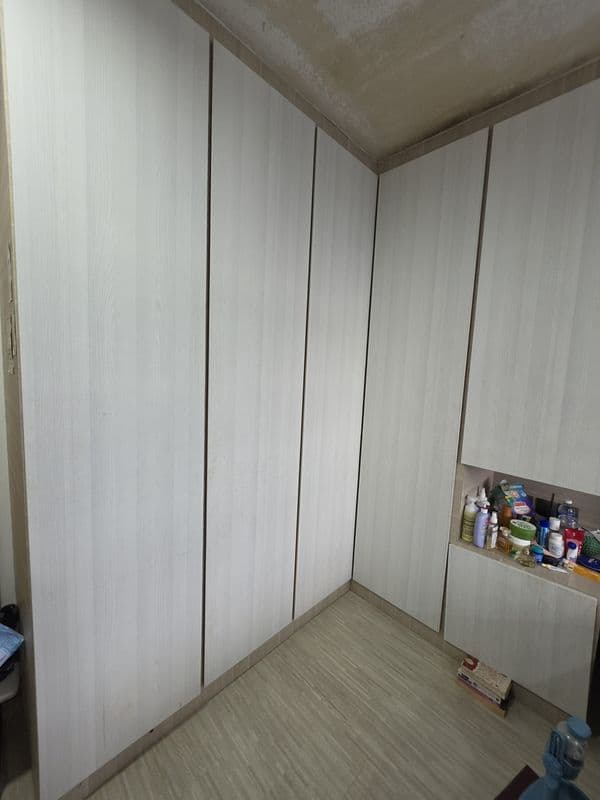
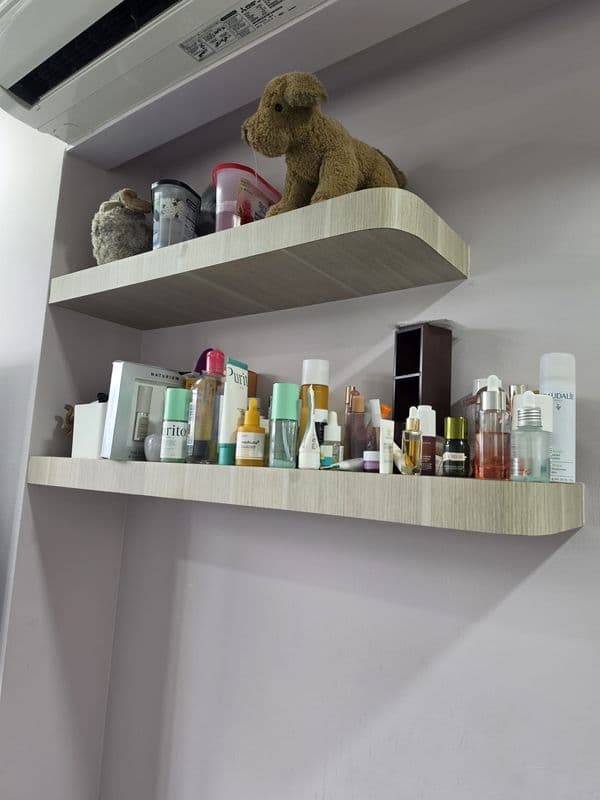
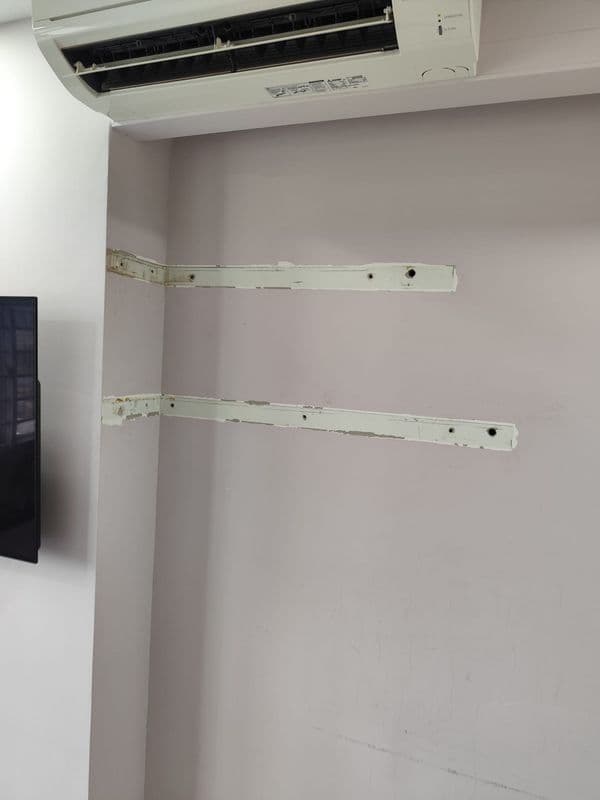
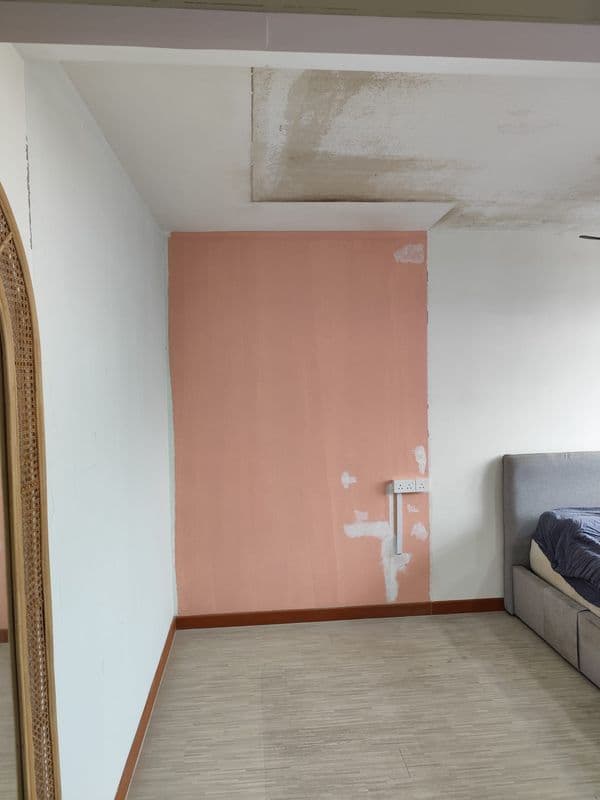
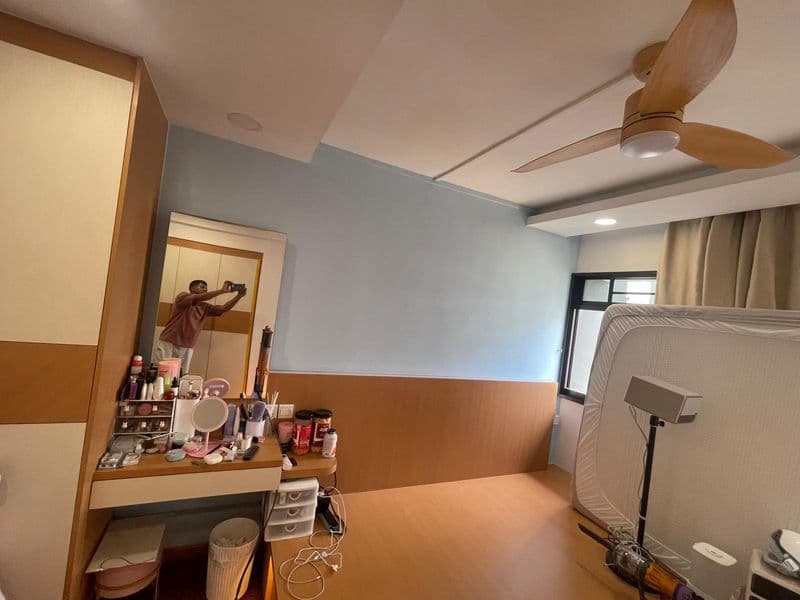
A mid‑rise HDB unit in Singapore was undergoing a full kitchen and built‑in storage renovation. The homeowner elected to retain the existing layout while replacing the aging cabinetry, countertop, and associated service penetrations. Our team was tasked with the complete dismantling and removal of the built‑in carpentry, including wall‑mounted cabinets, a freestanding pantry unit, and the integrated kitchen countertop. The scope also required careful wall hacking to expose service chases, reroute electrical conduits, and prepare the walls for the new high‑gloss panel cladding and light wood‑look flooring that would follow the demolition phase.
From the outset, we coordinated closely with the homeowner and the interior designer via WhatsApp, providing daily progress snapshots and confirming each milestone before proceeding. This transparent communication ensured that design intent was respected while maintaining a tight construction schedule.
Technical Challenges
Limited Access and Tight Service Zones
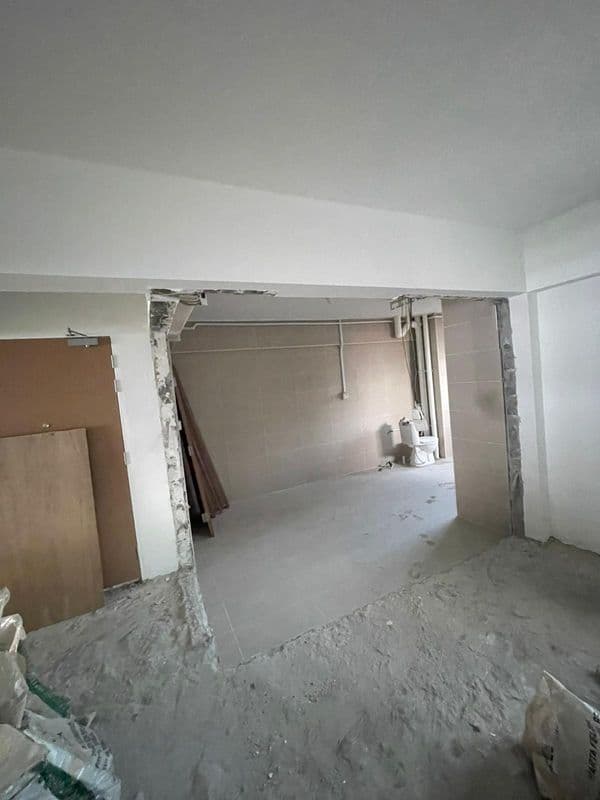
The existing kitchen was a compact corridor‑type layout with built‑in cabinets abutting the wall and a narrow service strip beneath the countertop. Removing the units without damaging the surrounding plaster, the adjacent living area, or the concealed plumbing required precise de‑construction sequencing. We employed selective dismantling techniques, first stripping the countertop, then unbolting the cabinet carcasses, and finally hacking only the necessary wall sections to expose the service chase.Protection of Adjacent Living Spaces
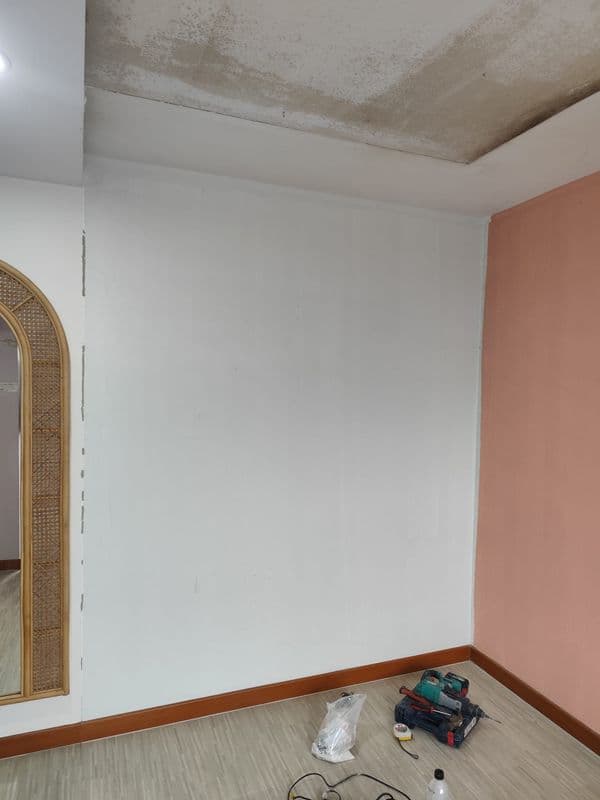
The unit shared a common wall with the neighboring apartment, and the living room and bathroom were still occupied. To prevent dust migration and accidental impact, we installed temporary dust‑control barriers and used low‑vibration hand tools for tile and wall removal. All debris was immediately bagged and removed daily, limiting contamination to the demolition zone.Service Re‑routing and Structural Integrity
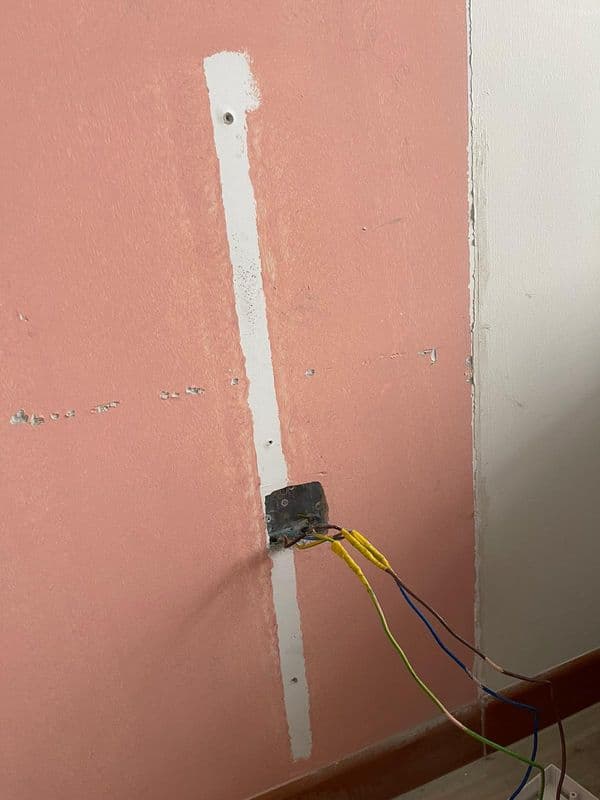
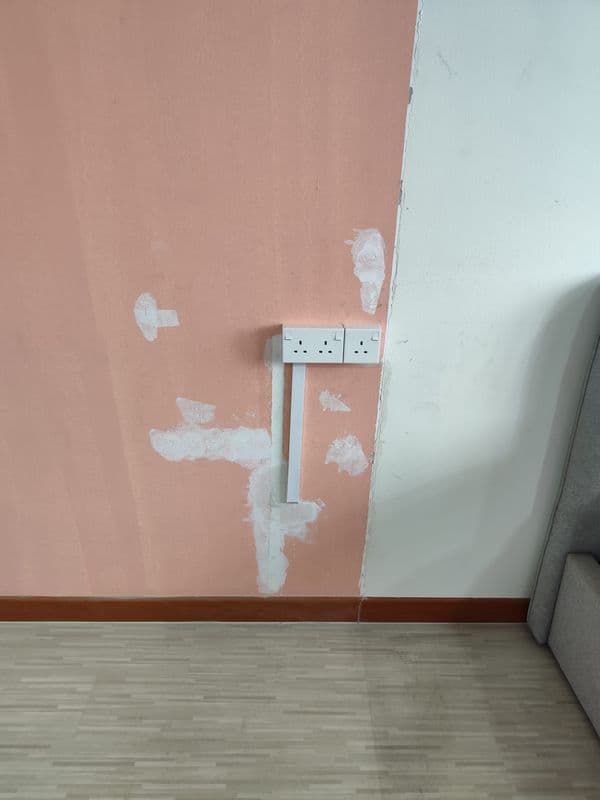
The demolition revealed a complex network of electrical conduits and a structural wall that required a precise opening for new service routing. We cut a clean rectangular chase, routed new green and blue wiring with yellow sheathing, and sealed the surrounding masonry to preserve structural stability. The challenge was to execute these cuts without compromising the load‑bearing capacity of the wall, which we achieved through careful measurement and the use of a concrete saw with dust‑extraction attachments.Coordinating with Ongoing Interior Fit‑Out
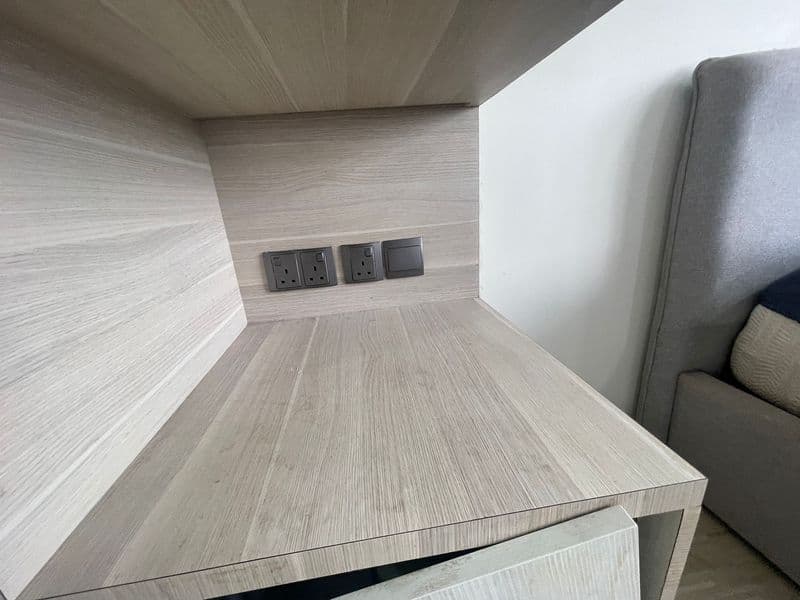
The interior designer had already specified a vertical panel cladding system and a light wood‑grain flooring to be installed immediately after demolition. Timing the removal of the cabinetry and the subsequent wall preparation had to align with the delivery schedule of the new finishes. Our crew staged the demolition in zones, completing the cabinet removal in the first zone while the second zone’s wall hacking was underway, ensuring a seamless hand‑over to the fit‑out team.
Project Considerations
Safety & Dust Management
We deployed portable dust extractors equipped with HEPA filters at each demolition point. All open wall sections were temporarily covered with breathable fabric sheeting, and the floor was protected with reusable drop cloths to safeguard the existing tiles and the new flooring material that would be laid later.Neighbouring Unit Minimisation
Work hours were limited to the approved window of 9 am–5 pm, and vibration‑dampening pads were placed under all power tools to reduce noise transmission. A dedicated liaison officer kept the adjacent residents informed of daily activities, mitigating any concerns about disruption.Preservation of Re‑usable Elements
Certain high‑quality cabinet doors and hardware were salvaged for potential reuse in other parts of the home. These components were carefully detached, labelled, and stored in a climate‑controlled area on‑site to prevent warping or damage.Documentation & Communication
Progress photographs and written updates were shared on WhatsApp at the end of each day. This transparent
Project Gallery