HDB reinstatement after a tenancy: a landlord's checklist for your flat

Jeff Kang
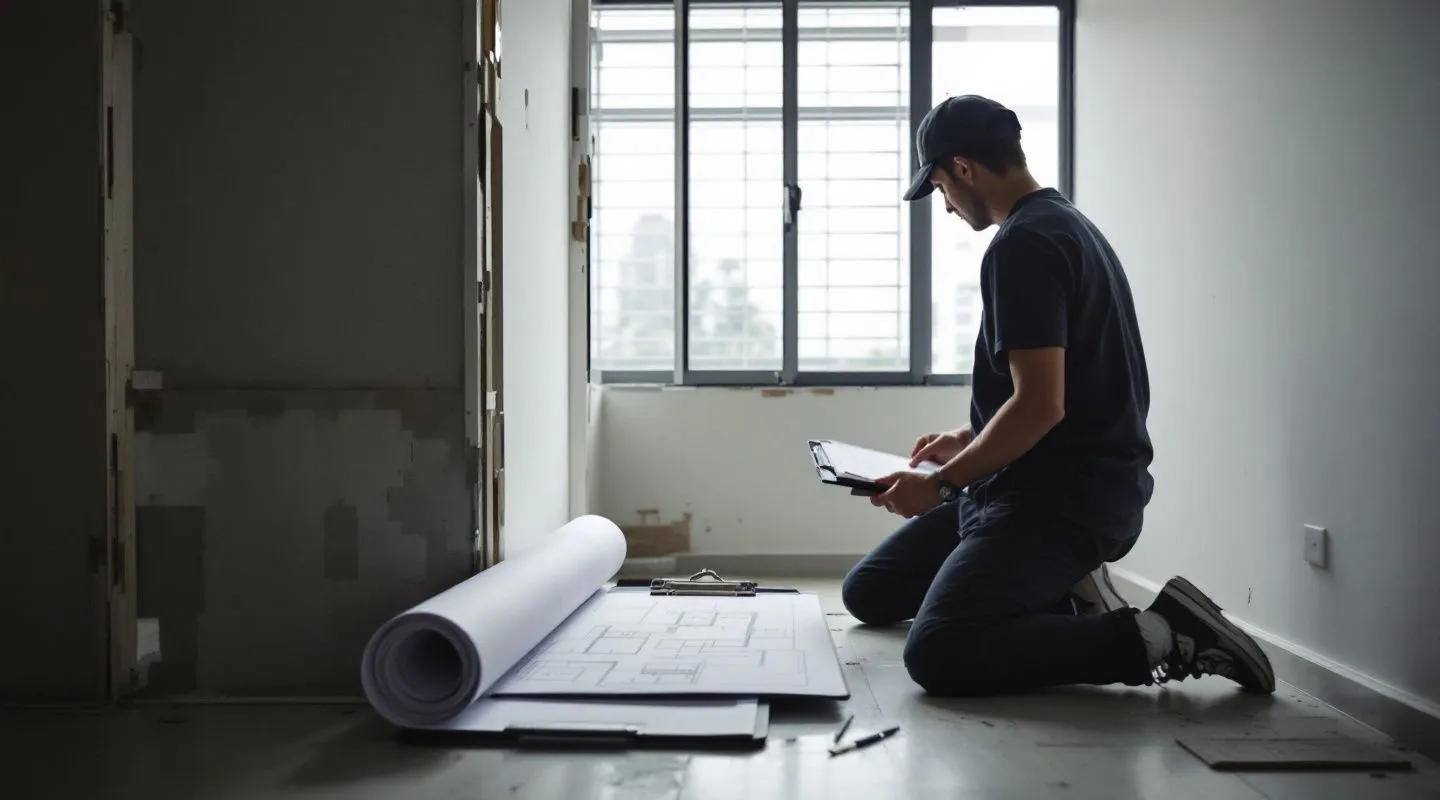
The tenant has handed back the keys, and the flat does not look quite the way it did on day one. HDB reinstatement after a tenancy is easier when you follow a fixed order: walk the flat, record what you find, check for changes that were never approved, then clear, remove, restore and paint. That order avoids missed items and repeat visits.
We have carried out reinstatement works since 2015. This checklist sets out the works in the order they happen. Use it to plan your own handover, or to brief the team that will do the work. If you would rather hand the job over, our HDB wall reinstatement service covers the removal and repair steps below.
Before the walkthrough: gather your tenancy papers
Bring your records to the walkthrough so you can check the flat against them.
- Collect the tenancy agreement, the signed inventory list and the handover-in photos.
- Note the condition clauses and the security deposit terms in the agreement.
- Pack a torch, a phone for dated photos and a simple room-by-room list.
- Book the walkthrough while the tenant can still attend, so both sides see the same unit.
If you no longer have handover-in photos, the inventory list becomes your main reference. Keep a copy of both in one folder before you visit.
Walk the flat: wear and tear versus damage
Start by separating normal ageing from damage. Fair wear and tear covers faded paint, minor scuffs and light marks from normal living. Damage covers holes, broken fittings, stains and missing items left by a tenant who did not take proper care of the unit. Your tenancy agreement usually sets out how the two are treated, so read that clause first.
Then check each room in turn:
- Check walls for holes, patched areas, peeling paint and marks near switches
- Look at the ceiling for stains, cracks or signs of damp
- Inspect the floor for chipped or lifted tiles, deep scratches and loose skirting
- Test doors and frames for missing doors, dents, damaged frames and handles
- Examine bathrooms for cracked fittings, loose tiles and sealant that has lifted
- Open kitchen cabinet doors and check hinges, the hob area and countertop edges
- Try window locks and check grilles and panes for bends or looseness
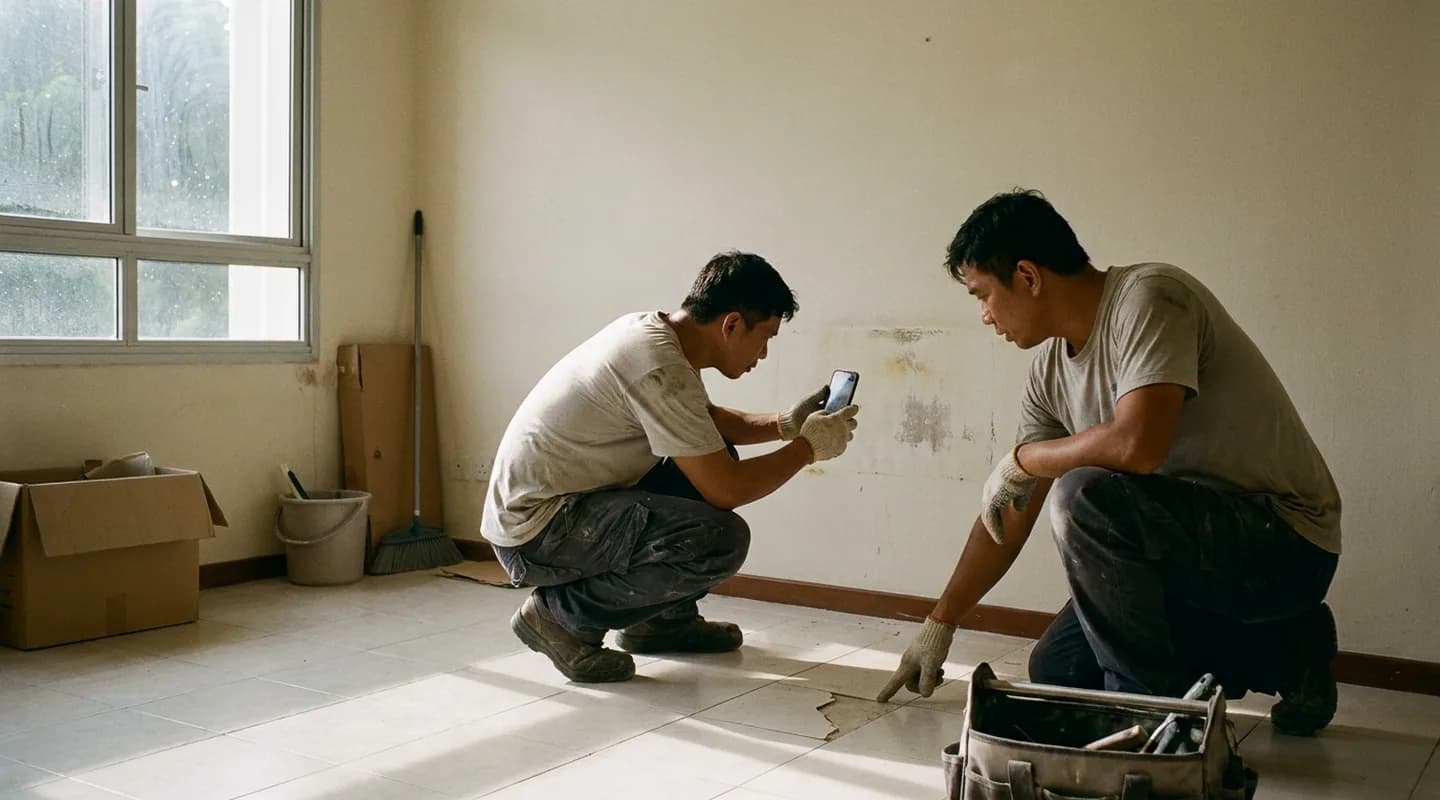
Record every finding against the inventory list with a dated photo. Then sort the items into two groups. Cosmetic items, such as light marks, suit touch-up painting. Items that need repair or removal go on a separate work list. Keeping the groups apart makes it clear what needs a painter and what needs a contractor.
Check for unauthorised works and HDB rules
Compare the flat with the inventory list and look for changes that were not there at handover-in. Some of these need HDB approval, such as hacking walls or replacing floor and wall tiles. Others, such as added carpentry, usually need no HDB permit but may still breach your tenancy agreement. Common ones are:
- Walls that were hacked or altered
- Doors and door frames that were removed
- Carpentry that was added
- Floor or wall tiles that were changed
Any hacking or demolition of walls in an HDB flat needs HDB's prior written approval before the works start, and that approval is submitted through an authorised route. Rules change, so check with HDB for the current requirements. The same applies to any HDB rule that bears on a change you find. If you are unsure whether a change was approved, ask the tenant and your agent for any paperwork, and check with HDB.
Works that change walls or fittings may need reinstating if they were not approved. This is where HDB hacking becomes part of a landlord's checklist, even though you never planned any hacking yourself. You can read more about the approval process in our guide to the HDB hacking permit.
Do not judge which wall can be hacked by its appearance. Whether a wall can be removed, or a removed wall put back, is a question for HDB and a qualified professional.
HDB hacking permits are applied for under a sister company registered in HDB's Directory of Renovation Contractors.
Order of works, step one and two: clear and remove
Step one is to clear. Take out anything the tenant left behind, including unwanted furniture, boxes and debris. Clear the flat before any repair starts, or the repairs will be done around clutter and redone later.
Step two is to remove. Dismantle fixtures or carpentry that were added without your approval, or works that needed HDB approval but did not get it, and take out damaged items that cannot be repaired. Electrical work must be done by a Licensed Electrical Worker, so do not disconnect wiring yourself.
Disposal is part of this stage, not an afterthought. Our guide to renovation debris disposal explains the routes that apply, and our dismantling and disposal services handle the hauling.
On one recent job at an HDB flat in Toa Payoh, completed on 3 August 2026, the recorded scope was the removal of built-in full height cabinets and a table. Items of that size are easy to underestimate at a walkthrough, which is why we suggest listing them before you ask for a quote.
Order of works, step three and four: restore and paint
Step three is to restore. Patch holes and openings, repair damaged surfaces and reinstate the affected areas so the walls and floor are sound before any paint goes on.
Step four is to paint. Use touch-up painting for light marks. Choose a fuller repaint where marks or patches would show through a spot repair. Our painting touch-ups between tenancies service covers both.
On another recent job at an HDB flat in Bukit Batok, completed on 31 August 2026, the recorded scope was the hacking of a door and door frame, repair of the affected wall, followed by a paint touch-up. The order held on a small job as it does on a large one: remove first, repair second, paint last.
Deposit, inventory photos and record keeping
A clear record protects both landlord and tenant when the deposit is settled.
- Match each deduction to an item on the inventory list and to a dated photo.
- Keep quotes and receipts for repairs, so each deduction can be traced.
- Share your findings with the tenant in writing and give the tenant a chance to respond.
- Keep one folder for each tenancy, ready for the next handover.
Deductions that follow the agreement and come with evidence tend to be settled with less back and forth.
HDB reinstatement checklist: quick version
Print or save this list and tick items off as you go.
- Collect the tenancy agreement, inventory list and handover-in photos
- Pack a torch and phone for dated photos
- Note the condition clauses and deposit terms
- Book the walkthrough with the tenant
- Photograph every room with dated photos
- Separate wear and tear from damage
- Sort items into cosmetic and repair lists
- Compare the flat with the inventory for unauthorised works
- Check with HDB on any changed walls or fittings
- Clear items left behind
- Remove unapproved fixtures and damaged items
- Use a Licensed Electrical Worker for electrical work
- Arrange disposal of debris
- Patch and repair walls, ceilings and floors
- Touch up or repaint
- Keep quotes and receipts for repairs
- Match each deduction to a photo and an inventory item
- Send findings to the tenant in writing
- File records for the next tenancy
Frequently asked questions
Is it legal to renovate an HDB flat without a permit?
Hacking walls and certain other works in an HDB flat need HDB's prior written approval before they start. The exact requirements change, so check with HDB before any works begin.
How to know which wall can be hacked?
Do not judge by appearance. Check with HDB and a qualified professional before any wall is hacked or reinstated.
How long does an HDB hacking permit take?
The time depends on the proposal, so we do not quote a fixed period. Check with HDB for the current process.
How much does HDB hacking cost?
The cost depends on the scope of works, the type of wall, the volume of debris, access to the flat and your timeline. We quote after seeing the flat, so send photos and a list of items.
Get a quote for your HDB flat
Work backwards from the day your next tenancy starts, and allow time for the clear, remove, restore and paint stages. Send us an enquiry through our HDB reinstatement and hacking permit service page with the flat type, photos and your list of items. Scope, number of rooms, debris volume, access and timeline all shape the quote. We reply within 24 hours on business days.