
Ceiling mould removal in Singapore: causes, treatment and when to repaint

Jeff Kang
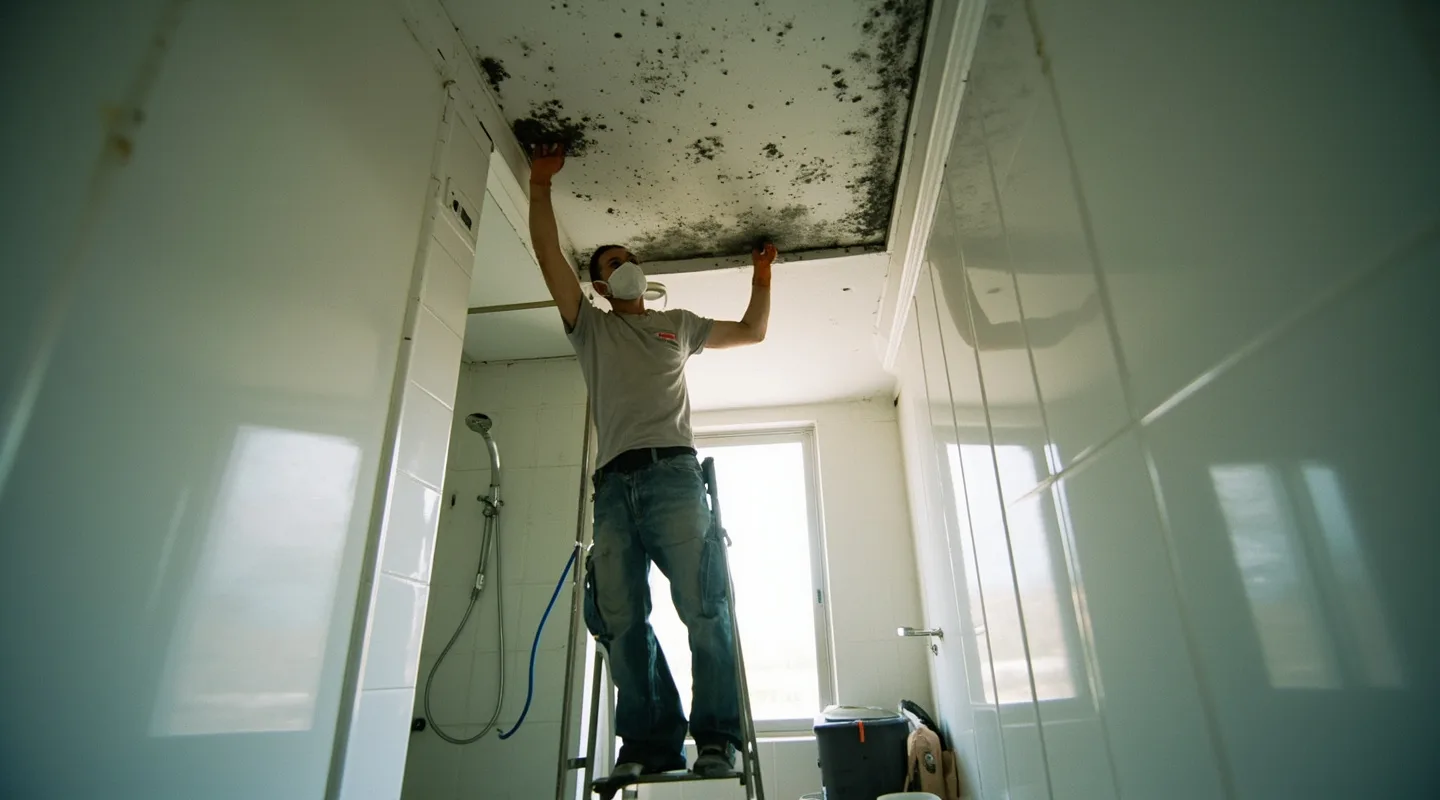
Dark patches on a bathroom ceiling that keep returning after a repaint are a common complaint in Singapore homes. Ceiling mould removal only lasts when the cause of the damp is dealt with as well as the stain. We have done reinstatement and hacking works since 2015. This guide explains why the mould grows, what treatment involves and when anti-mould paint alone is enough. If you would rather have it inspected, our ceiling mould removal and painting service covers treatment and repainting.
Why bathroom ceilings grow mould
Mould grows on a ceiling because the surface stays damp. Steam from hot showers settles on the ceiling, weak ventilation keeps the air humid, and the water condenses on a surface cooler than the room. Given enough time, mould starts to feed on the paint film and the dust sitting on it.
Several things can cause that dampness:
- Steam and humidity from daily showers
- Weak ventilation, such as a closed window or an exhaust fan that is rarely switched on
- Condensation on a cool ceiling surface
- Seepage or a slow leak from the unit above or from a pipe
- Old paint that has aged and no longer sheds moisture well
Bathroom ceiling mould removal is a frequent job in HDB and condo bathrooms because many have small windows and little airflow. Steam has nowhere to go, so it stays on the ceiling.
What mould on the ceiling means for your home
Mould shows itself in a few ways: black or green spots, a musty smell, and paint that peels or bubbles. Ceilings in bathrooms and in rooms next to a wet area are the usual places.
Is ceiling mould harmful? Damp and mould are linked to respiratory symptoms, allergies and asthma, according to the World Health Organization, so it is worth dealing with early. We do not give medical advice, and anyone with health concerns should speak to a doctor.
Mould on ceiling removal that ignores the cause tends to fail. A surface clean rarely fixes damp, and the spots return within weeks or months.
Common quick fixes fall short for the same reason:
- Wiping with a cloth removes what you can see but leaves spores in the paint film.
- A single coat of ordinary paint hides the patch for a while, then the mould shows through.
- Switching on a dehumidifier helps the room, but it does not repair a leak or a failed paint surface.
Treatment, anti-mould paint or full repaint: which do you need?
The right choice depends on what the ceiling shows.
- Light, dry, surface-only spots: treat the mould and repaint with anti-mould paint.
- Mould spread across the ceiling, or mould that keeps coming back: treat, seal and repaint the whole ceiling, so the new finish is even and the old growth is not left underneath.
- A damp patch, a stain that grows, or dripping: find the source first. Painting over active damp will not hold, and the paint will blister again.
Before treatment, the ceiling shows dark spots, a musty smell and paint that flakes or bubbles. After treatment, sealing and anti-mould paint, it should read as a dry, evenly coloured surface with no spots showing through. An oil sealer goes on before the paint. It locks in stains and residue and gives the anti-mould coat a stable surface to grip.
Painting straight over mould is a common mistake. The growth can show through the new coat and start again underneath it. If the ceiling only needs a repaint and no mould treatment, our painting and touch-up service covers that.
How ceiling mould removal works
Ceiling mould removal follows a set order, and skipping a step usually shows up later as peeling or dark spots.
- Protect the floor, fixtures and any furniture that cannot be moved.
- Treat the mould on the ceiling with a mould treatment product.
- Let the surface dry fully.
- Scrape off loose or blistered paint.
- Patch cracks and holes.
- Apply an oil sealer.
- Finish with anti-mould paint.
Mould removal on a bathroom ceiling depends on the drying step. Sealing or painting over a ceiling that still holds moisture traps the damp, and the problem comes back under the new paint.
On one recent job at a Bukit Merah HDB flat, completed on 24 April 2026, the recorded scope was mould removal on the whole house ceiling, oil sealer and anti-mould painting for the whole house ceiling.
To help stop mould coming back:
- Run the exhaust fan or open the window after showers.
- Wipe condensation off the ceiling and walls.
- Have leaks and dripping pipes fixed early.
What ceiling mould removal costs
How much does mould removal cost in Singapore? It depends on the area and condition of the ceiling, so we quote after seeing it, from photos or a site visit, rather than from a rate card. Hacking, plastering and skim coat are quoted separately.
What moves the final quote:
- Ceiling size
- How far the mould has spread
- Prep work and patching
- Sealer choice
- Paint type
- Access and furniture protection
Comparing quotes is easier when each one states the same things: whether mould treatment, sealer, patching and anti-mould paint are all included, and whether furniture protection is covered. A low headline figure that leaves out the sealer or the prep can cost more once those items are added back.
Send us photos of the ceiling and we will tell you what applies.
When to call a professional
Call a professional when:
- Mould covers a large area
- Mould returns after treatment
- A stain grows or the ceiling drips
A leak from above or from a pipe is a repair job first, and the ceiling is repainted afterwards. Whole-home jobs and high ceilings also need proper access and protection, which is difficult to arrange safely with a household ladder. A site visit lets us check the ceiling, the surrounding walls and the likely source of moisture before any paint goes on. For any of these, use our ceiling mould removal and painting service as your enquiry route.
Frequently asked questions
Is ceiling mould harmful?
Damp and mould are linked to respiratory symptoms, allergies and asthma, according to the World Health Organization, so it is worth dealing with early. We do not give medical advice. If someone at home has health concerns, speak to a doctor.
How much does ceiling mould removal cost in Singapore?
It depends on ceiling size, how far the mould has spread and the prep needed, so we quote after seeing the ceiling. Send us photos and we will quote.
Can I just repaint over mould?
No. Treat the mould first, let the ceiling dry, then seal and repaint. Paint applied straight over mould can let the growth show through and return.
How do I stop mould coming back?
Reduce moisture. Use the exhaust fan or open the window after showers, wipe condensation, and fix leaks early. If the ceiling is damp from a leak, repair that before repainting.
Get a quote for your ceiling mould removal
Send an enquiry with photos of the ceiling and your flat type through our ceiling mould removal and painting service page. We reply within 24 hours on business days. If the ceiling only needs a fresh coat after treatment, ask us about a repaint after treatment.
Email: hello@hacking.sg WhatsApp: (+65) 8484 0027